
I Built a 1-Person AI Business in 30 Days Using Claude Code — Here’s Every Step
The Solo Founder Blueprint That Is Changing the Way People Build and Earn Online in 2026
Starting a 1-person AI business with Claude Code is no longer a dream for tomorrow — it is something real people are doing right now, in 30 days or less, with zero team and zero agency.
Smart solo founders are using tools like ClawCastle, Claude Code, and a tight workflow to build, market, and close deals from a single laptop.
You do not need a developer background.
You do not need a big startup budget.
You do not need to work 16-hour days.
What you need is a clear plan, the right AI tools, and the willingness to follow through for 30 days without quitting.
This article breaks down every step of that plan — from finding a validated business idea, to building your first MVP, to landing your first paying client — all the way to running the full operation while you live your actual life.
We strongly recommend that you check out our guide on how to take advantage of AI in today’s passive income economy.
Table of Contents
Why a 1-Person AI Business Is the Smartest Move in 2026
The business landscape shifted hard in 2025 and the shift has only gotten sharper in 2026.
Clients who used to pay agencies $5,000 to $20,000 for software builds are now watching solo founders deliver the same quality faster and cheaper using AI tools like Claude Code and AmpereAI.
One-person operations are outperforming small teams because the tools have caught up to the talent gap.
Claude Code — Anthropic’s agentic coding tool — lets you give a plain-language task and watch it plan, write files, run commands, read your entire codebase, and iterate until the job is done.
This is not autocomplete.
This is an AI that reasons through problems, breaks work into steps, and executes like a senior engineer who never gets tired.
Pair that with HandyClaw, which helps you manage and automate parts of your workflow, and you already have the spine of a real business operation before you write a single line of code yourself.
The 30-day window is not a gimmick.
It is a focused timeline that forces you to ship, sell, and learn — all three — instead of endlessly planning and never launching.
Week 1: Finding and Validating Your Business Idea
Stop Guessing and Start Researching
Most people spend weeks spinning in circles trying to come up with the perfect idea.
The problem is not that the ideas are bad.
The problem is that they are picking ideas based on what feels smart instead of what the market is screaming for.
Here is how to fix that in the first seven days.
Open Claude Code and give it a structured research prompt.
Tell it to browse Reddit communities, analyze product review sites like G2 and Trustpilot, and pull together a ranked list of AI business ideas based on real market pain — not guesses.
What comes back is not a generic list of suggestions.
It is a ranked research report with reasoning, pulled from real conversations real people are having online right now.
Reddit is gold for this kind of research because people are brutally honest in anonymous communities.
Pull the most upvoted posts in three to five communities where your target pain point gets discussed.
Ask Claude Code to summarize the exact language people use to describe their frustration — because that exact language becomes your marketing copy later.
ClawCastle is a great example of the kind of AI tool business model worth studying during this research phase — it shows how a focused AI product with a clear use case can attract a loyal user base quickly.
Once you have your top idea, go a step further.
Ask Claude Code to research your top three competitors, pull their pricing, analyze their one-star and two-star reviews on G2 or Trustpilot, and identify the top complaints customers have about existing solutions.
That gap between what people are complaining about and what the market currently offers — that is where your product lives.
By the end of Day 7, you should have a validated idea, a competitive analysis, and a swipe file of customer language ready to use.
Week 2: Building Your MVP Without Getting Stuck
Move Fast, Ship Ugly, Iterate Smart
The single biggest mistake solo founders make in Week 2 is trying to build the perfect product.
There is no perfect product at the MVP stage.
There is only a working product that solves one core problem well enough to get someone to pay for it.
ReplitIncome is built around this exact principle — Replit’s Agent 3 can scaffold a full-stack app from a plain-language prompt, giving non-technical founders a real shot at building software products without a developer on payroll.
Before you start building, write a two-paragraph product brief.
Keep it simple: what the app does, who it is for, the tech stack you want to use, and what specific feature you are building in this session.
Drop that brief at the start of every Claude Code session and you will immediately notice the quality of output goes up.
Claude Code reads context like a senior developer reads a ticket — the more specific you are, the better the output.
For any feature that users will actually see and interact with, start with the visual design before you write a single line of code.
Claude’s design capabilities let you describe your UI in plain language and generate full visual prototypes — landing pages, dashboards, onboarding flows — all through a conversation.
Get the design right first, then hand it off to Claude Code to turn it into production-ready front-end code.
This saves you hours of back-and-forth trying to describe margin sizes and button colors in prompts.
For complex builds with multiple moving parts — back-end APIs, database models, front-end components, authentication layers — Claude Code supports sub-agents.
You can spin up parallel agents, each handling a specific slice of the build at the same time.
One agent handles your back-end routes.
One handles your database schema.
One builds your front-end components.
They all share context and report back to a main orchestrating agent.
What used to take a solo developer a week of focused work can now be done in a single intensive day using this workflow.
AmpereAI is worth looking at here too — it is designed to help builders move fast on AI-powered products, which fits perfectly into what you are trying to accomplish in this two-week sprint.
Build in focused sessions.
Give Claude Code one clear task per session — not five features at once.
“Build the authentication flow” is a good session task.
“Build the authentication flow, the dashboard, the billing page, and the onboarding sequence” is a session that will produce mediocre results across all four.
By the end of Day 14, you should have a working MVP with a front end that does not look like it was built in a weekend — even if it was.
Week 3: Marketing Before You Think You Are Ready
The Founders Who Win Start Posting Before the Product Is Finished
Here is the rule that separates the solo founders who gain traction from the ones who build in silence for months: you start marketing the moment you start building.
Not after.
Not when it is ready.
The moment you write your first prompt in Claude Code, you have content worth posting.
Post your build process on X.
Post your learnings on LinkedIn.
Show what you are building on Instagram Reels or YouTube Shorts.
You are not selling yet — you are building an audience while you build your product.
HandyClaw fits naturally into this stage of the process, helping automate parts of the workflow so you can stay consistent with posting even while you are deep in a build sprint.
For content at scale, build a simple content pipeline inside Claude Code.
Feed it a knowledge base of your best-performing past posts — or study examples from creators in your niche.
Give Claude Code a voice memo or a bullet list of what you built or learned that week.
It writes three X posts in your voice, a LinkedIn post, and a short-form video script — all ready for your review.
Once you approve the copy, Claude Code can use platform APIs to schedule or post directly.
For visual content — carousels, thumbnails, quote graphics — describe the layout, the text, and the vibe you want, and let Claude’s design tools generate options for you.
This cuts a 45-minute daily content session down to eight minutes of reviewing and approving work the AI already prepared.
If you are building a B2B product, Week 3 is also when you set up your outreach pipeline.
Give Claude Code your ideal client profile, your offer, and your tone, and it will draft personalized LinkedIn DMs and cold email sequences that you can store in a simple UI for copy-pasting.
ReplitIncome is a strong example of how packaging the right tool with the right marketing angle can turn a simple product into consistent monthly revenue — study the positioning and learn from it.
By the end of Day 21, you should have an audience starting to grow, consistent content going out, and at least a few warm leads in your pipeline.
Week 4: Closing Deals and Running the Operation From Anywhere
Proposals Win Clients, Systems Keep Them
Week 4 is where the money conversations happen.
A potential client says “send me a proposal” and most technical founders freeze.
They can build anything in a week but spend two weeks writing a two-page document.
Do not let that be you.
Use Claude Code — or Claude’s Cowork feature if you have access — to build an AI-powered proposal writer.
Feed it your sales call transcript, your offer details, and your previous proposals that have worked.
It writes a full proposal that you review and send as-is.
This is not just faster — it is actually better, because the AI picks up on the language and framing that already closed previous deals.
ClawCastle is the kind of product that clients immediately understand the value of — a focused AI tool with a clean interface and a clear use case closes faster than a vague platform with too many features.
Use that as a design principle for how you present your own product in proposals.
Add a visual deck to your proposal using Claude’s design tools.
Most clients are used to receiving boring Word documents.
When they receive a polished slide deck with a clean layout, your branding, a system architecture diagram, and a structured pricing page — it signals professionalism and seriousness that stands out immediately.
That is buyer psychology working in your favor.
For remote operation — running your business while you are at the gym, on the couch, or traveling — Claude Dispatch lets you text tasks from your phone to your desktop and have Claude execute them using your actual computer, your files, your apps, and your developer tools.
Sunday night you fire off a list of tasks from your phone.
Monday morning you open your laptop to a desktop full of finished work waiting for your review.
AmpereAI supports this kind of lean, remote-first operation model — it is built with the solo founder in mind, so it fits cleanly into a workflow where you are managing everything yourself across multiple tools.
Real results from real solo founders in 2026 back this up.
Mentees working with experienced AI business coaches have closed single automations for $5,000 that turned into $22,000 worth of follow-up work from the same client.
Others have built AI consulting practices charging $1,000 to $2,000 per project and crossed $3,000 in revenue within their first four days of outreach.
SaaS products built on this kind of workflow have reached $11,000 in monthly recurring revenue and closed enterprise licenses for $1,000 in a single day.
HandyClaw plays a real role in this stage — it helps you stay organized across your client pipeline so nothing falls through the cracks when you are running the whole operation solo.
By the end of Day 30, you should have at least one paying client, a proposal process that runs faster than your competitors, and a content and outreach pipeline that runs largely on autopilot.
The 30-Day Checkpoint: What You Should Have Built
A Real Business, Not a Side Project
At the end of 30 days, if you followed this plan, here is what you have.
A validated business idea backed by real market research, not guesses.
A working MVP with a professional front end that does not look rushed.
A consistent content presence across at least two platforms with posts that sound like you, not like a bot.
A warm outreach pipeline with personalized messages going out to your ideal clients.
At least one closed deal or a proposal currently in review.
A system where Claude Code, Claude’s design tools, and your automation stack are doing most of the operational work while you focus on client relationships and growth.
ClawCastle is the kind of AI tool that belongs in your ecosystem at this point — it helps you continue to build and operate without needing to add headcount.
ReplitIncome gives you a model for how to package your AI capabilities into a product people will pay for consistently — study how it positions Replit Agent 3 and apply those lessons to your own offer.
The question is not whether one person can really do all of this.
The tools have proven that one person absolutely can.
The question is whether you are going to keep reading about it or start doing it.
Thirty days from today, the answer will be obvious — either you built something real, or you are still thinking about it.
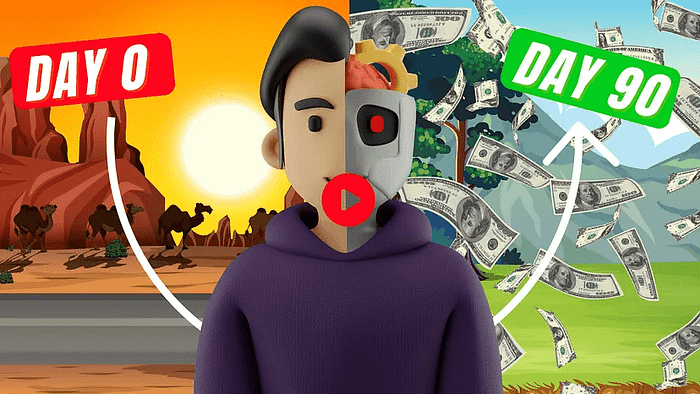
We strongly recommend that you check out our guide on how to take advantage of AI in today’s passive income economy.