Nobody Is Talking About This AI Skill — But Sam Altman Says It Will Dominate 2026
What Sam Altman Said That Most People Completely Missed
The most important AI skill for 2026 is not the one everyone is debating on social media right now.
It is not prompt engineering.
It is not knowing how to code in Python.
It is not even knowing which AI tools to download.
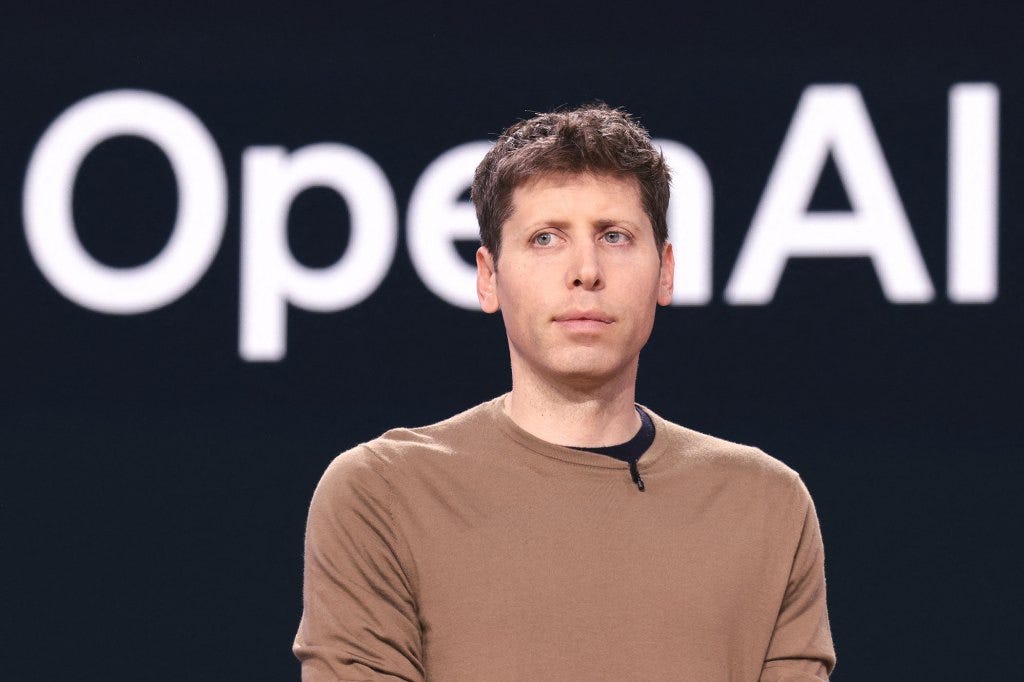
Sam Altman, the CEO of OpenAI, gave an interview in early 2026 on the Big Technology Podcast hosted by Alex Kantrowitz, and buried inside that conversation were five practical skills that almost nobody picked up on.
Most people watched that interview and came away talking about ChatGPT user numbers, enterprise growth, and the infrastructure spending race.
But the real gold in that conversation was something far more human, far more actionable, and far more directly useful to anyone trying to build a business using AI tools right now in 2026.
If you are already using tools like ClawCastle to streamline your AI agency workflows, or you are exploring platforms like HandyClaw to automate your client delivery, what you are about to read will give those tools a sharper edge.
Because without these five skills, no tool in the world is going to build your business for you.
Let us break them all down, one by one.
We strongly recommend that you check out our guide on how to take advantage of AI in today’s passive income economy.
AI Skill #1 — Simplicity in Problem Solving Is the Most Underrated AI Skill for 2026
The first hidden AI skill Sam Altman pointed toward is something that sounds almost too simple to be valuable.
It is the ability to take a complex, multi-layered problem and strip it down until you are left with just one core issue to solve.
Not five problems.
Not three systems.
Just one.
When you are building an AI agency or an AI-powered online business in 2026, the temptation is to build something big and complicated right from the start.
You want to automate everything, offer every service, and use every new tool that drops each week.
But Sam Altman’s behavior, and the businesses he has backed through Y Combinator over the years, tells a very different story about what actually works.
Sam Walton, the founder of Walmart, did not start with a complex retail empire.
He started with one idea — how do I sell things for as cheap as humanly possible?
That single idea, applied consistently over decades, built what became one of the largest companies on the planet.
More recently, Todd Graves, the founder of Raising Cane’s, turned that same philosophy into a multi-billion dollar fast food chain by selling exactly one thing — chicken fingers.
No burgers.
No salads.
No seasonal menu.
Just chicken fingers, done better than anyone else on Earth.
Raising Cane’s was founded in 1996 and today operates over 800 locations with a valuation estimated to be in the multi-billions.
The lesson Altman was quietly teaching is this — the AI businesses that will dominate 2026 are not the ones offering the most services.
They are the ones that solve one specific problem extraordinarily well.
If you are using ClawCastle to build AI-powered client systems, pick one pain point your client has and solve that first.
Do not try to automate their entire business on day one.
One problem, one system, one result.
That is the AI skill that scales.
AI Skill #2 — Writing Is Not Dead. It Is the Hidden Weapon of Every Successful AI Business Owner
The second skill Sam Altman revealed is one that almost everyone in the AI community has completely ignored.
Writing.
Not just content creation or blog posts.
Real, strategic writing as a tool for clear thinking.
In his 2026 interview, Sam Altman shared that he still takes notes by hand, on physical paper.
He said, and this is paraphrased from the conversation, that writing is a tool for thinking most importantly.
He uses handwritten notes to work through ideas and strategies before ever acting on them.
Now think about what this means in the context of building an AI-powered business in 2026.
First, the ability to write down your ideas forces you to think with precision.
You cannot write vague thoughts clearly on paper.
The act of writing demands clarity, and clarity is the foundation of every good business decision.
Second, writing in the business context also means copywriting — the skill of using words, psychology, and persuasion to move people to take action online.
This is one of the most valuable and underpaid skills in the entire digital economy right now.
Most AI agency owners and content creators focus entirely on the technical side — which automation to set up, which model to use, which tool to connect.
But the words that sell the service, that convert the landing page, that close the client on a Zoom call — those words are still written by humans who understand persuasion.
If you are building income streams using tools like ReplitIncome to develop AI-powered apps and digital products without writing code, your ability to write compelling copy around what you build is what separates a product that gets five downloads from one that sells five hundred units in the first week.
Writing is the AI skill that amplifies everything else.
And Sam Altman — the person who runs the most talked-about AI company in the world — still writes by hand on paper.
That is not a coincidence.
AI Skill #3 — Micro Execution: The Secret Behind Getting More Done With Less Time
The third hidden AI skill Sam Altman hinted at in the 2026 interview is something he called working in short, focused bursts.
This is not a new concept in productivity circles, but the way it applies to building an AI business in 2026 is something very few people are talking about.
Altman shared in the conversation that he would rather work for fifteen minutes from his car than wait for a perfect ninety-minute block of focus time to open up in his schedule.
Think about what that means practically.
Most people who want to build an AI agency, launch a digital product using ReplitIncome, or grow a content and affiliate business are waiting for the perfect moment.
They are waiting for the weekend.
They are waiting until they have two hours of uninterrupted time.
They are waiting until they finish their current job, or until the kids are at school, or until the house is quiet.
And while they wait, the people who understand micro execution are shipping.
Fifteen focused minutes of writing one section of a blog post.
Twenty minutes of configuring one automation in HandyClaw for a client workflow.
Thirty minutes of building out one module in a digital product using ClawCastle.
None of those things feel impressive in isolation.
But stacked day after day, week after week, micro execution is what builds real businesses.
The person who works in small bursts consistently will always outperform the person who waits for the perfect window that never comes.
This AI skill for 2026 is not about working harder.
It is about working consistently, even when conditions are imperfect.
AI Skill #4 — Treating AI as a Force Multiplier, Not a Threat
Here is the skill that Sam Altman is most uniquely positioned to speak about, and it is also the most psychologically complex one on this list.
In his 2026 Big Technology Podcast interview, Altman spoke about ChatGPT approaching 900 million weekly active users.
He spoke about AI models like GPT-5.2 beating or tying expert-level knowledge workers on 70.9 percent of tasks in their internal GDP Valve evaluation.
He spoke about AI eventually being able to run entire companies, do scientific research, and potentially serve as a CEO under human oversight.
And yet, despite all of that, Sam Altman is not afraid of AI.
He looks at it as a force multiplier.
The fourth hidden AI skill is the ability to adopt that same mindset — not the fearful one that asks what will AI take from me, but the strategic one that asks how much further can AI take me.
This is not just optimism.
It is a practical business skill in 2026.
The people who are winning right now are the ones who understand that AI does not replace ambition, judgment, creativity, or relationship-building.
It amplifies them.
When you use AmpereAI to power your AI-driven applications and deployments, you are not replacing your skill as a builder or entrepreneur.
You are giving that skill a ten times larger engine.
When you use ClawCastle to run AI-powered client systems at a fraction of the time it would take manually, you are not cutting corners.
You are multiplying your output.
And when you use HandyClaw to automate delivery and management tasks inside your agency, you are not shrinking your role.
You are expanding the scope of what you can offer, without expanding the hours you work.
The fear-based mindset says AI will replace me.
The force-multiplier mindset says AI will help me do ten times more.
Sam Altman has both the most to gain and arguably the most credibility when it comes to looking at AI this way.
And he chooses the force-multiplier view every single time.
That AI skill alone is worth more than any certification or course you could take in 2026.
AI Skill #5 — Rest and Recovery Is Not Laziness. It Is a Competitive Advantage.
The final hidden AI skill that came through in Sam Altman’s 2026 interview is the most counterintuitive one.
It is rest.
Not vacation.
Not just sleep.
But real, deliberate, disconnected rest — the kind where you step away from the phone, close the laptop, and give your brain room to get bored and wander.
Altman shared in the conversation that he used to work constantly and that when he started taking real periods of time away — days, sometimes longer — his thinking changed.
He did not become less productive.
He became more creative and more strategic.
This matters enormously for anyone building an AI business in 2026, because the pace of change in this space is unlike anything that came before it.
In the time it takes you to read this article, there have likely been new AI model announcements, new tool launches, new use cases discovered, and new competitors entering the market.
The temptation is to stay plugged in at all times.
The temptation is to scroll through X, LinkedIn, and YouTube shorts looking for the next edge, the next tool, the next shortcut.
But the irony is that the most valuable thinking — the kind that produces original business ideas, creative positioning strategies, and genuine competitive advantages — happens when the brain is not consuming.
It happens when the brain is resting.
Altman made a specific point in the interview that stuck — rest gives your brain the ability to do something AI cannot replicate yet, which is use creative intuition to solve new problems in original ways.
If you are building with platforms like AmpereAI or developing no-code products through ReplitIncome, the creativity that makes your product stand out from the hundreds of similar ones is not going to come from consuming more content.
It is going to come from the quiet moments when your brain finally has space to connect dots in new ways.
Schedule rest the same way you schedule client calls and product launches.
Because in 2026, recovery time is a productivity strategy.
How These Five AI Skills Work Together in a Real Business
None of these five skills work in isolation.
They form a system — and once you see the system, you cannot unsee it.
Simplicity in problem solving gives you focus.
Writing gives you clarity and the power to sell.
Micro execution gives you momentum.
The force-multiplier mindset gives you confidence to use AI aggressively and without fear.
And rest gives your mind the creative capacity to keep innovating when everyone else is burning out.
When you layer these five skills on top of AI tools built for 2026 — platforms like ClawCastle for running AI-powered client workflows, HandyClaw for automating your agency delivery, AmpereAI for scaling your AI infrastructure, and ReplitIncome for turning AI into income-generating apps — you are not just building a business.
You are building a business that can scale without burning you out, differentiate without copying competitors, and keep growing even as the tools keep changing.
Why Most People Will Miss This and What You Should Do Right Now
Here is the honest truth about what Sam Altman revealed in that 2026 interview.
Most people who watched it came away talking about the infrastructure spending numbers, the IPO speculation, and the ChatGPT user count milestones.
Those are interesting.
But they are not actionable for someone building an AI business right now.
The five hidden AI skills are actionable.
Today, you can pick one problem your business or clients have and decide to build one system that solves just that problem.
Today, you can start writing your ideas and strategies down by hand before you act on them.
Today, you can use the next fifteen free minutes to move one task forward instead of waiting for the perfect two-hour window.
Today, you can open HandyClaw or ClawCastle and look at how to let AI carry more of the operational load so you can focus on the work only you can do.
And tonight, you can put the phone down an hour earlier and let your brain rest.
These are not big dramatic moves.
But they are exactly the kind of moves that Sam Altman — the person who runs the most valuable AI company ever built — says matter most in 2026.
The best AI skill for 2026 is not the flashiest one.
It is the one most people are too distracted to develop.
Now you know all five.
The question is what you do with them.
Quick Recap — The 5 Hidden AI Skills Sam Altman Revealed for 2026
Skill 1 — Simplicity in problem solving: solve one problem with one system before expanding.
Skill 2 — Writing as strategic thinking and copywriting: the words that sell and the words that clarify are both essential.
Skill 3 — Micro execution: fifteen focused minutes beats ninety imaginary ones every single time.
Skill 4 — AI as a force multiplier: use platforms like AmpereAI and ClawCastle to do more, not to replace your judgment.
Skill 5 — Rest and recovery: creative thinking is the one thing AI cannot replicate, and it only happens when your brain has space.
We strongly recommend that you check out our guide on how to take advantage of AI in today’s passive income economy.