The Quiet Elegance That Money Can’t Always Buy — But $50 Sometimes Can
You Don’t Have to Be Rich to Live Like It — These 6 Finds Prove It
Old money home décor on a budget is one of the most searched interior style topics of 2026, and for a very good reason.
There is a certain kind of home that stops you in your tracks the moment you walk through the door.
It is not loud, it is not flashy, and it does not try to impress you with bright colors or trendy statement pieces.
Instead, it wraps around you like a well-worn cashmere sweater on a cold afternoon — warm, rich, and deeply intentional in every detail.
That is the old money aesthetic, and it has been taking the interior design world by storm in ways that show no signs of slowing down.
The good news, and this is the part that most people miss, is that you do not need a trust fund or an interior designer on speed dial to pull this look off in your own home.
In fact, some of the most powerful old money décor upgrades cost less than a single tank of gas, and a handful of them can be found on Amazon, at your local thrift store, or tucked away at an estate sale just waiting to be discovered.
This article is going to walk you through six specific décor pieces — all under $50 — that carry that timeless, inherited-wealth energy and can completely transform the feeling of any room in your home almost overnight.
We strongly recommend that you check out our guide on how to take advantage of AI in today’s passive income economy.
Table of Contents
What Makes the Old Money Aesthetic So Different From Everything Else
Before jumping into the list, it helps to understand what separates old money home style from all the other interior trends fighting for your attention right now.
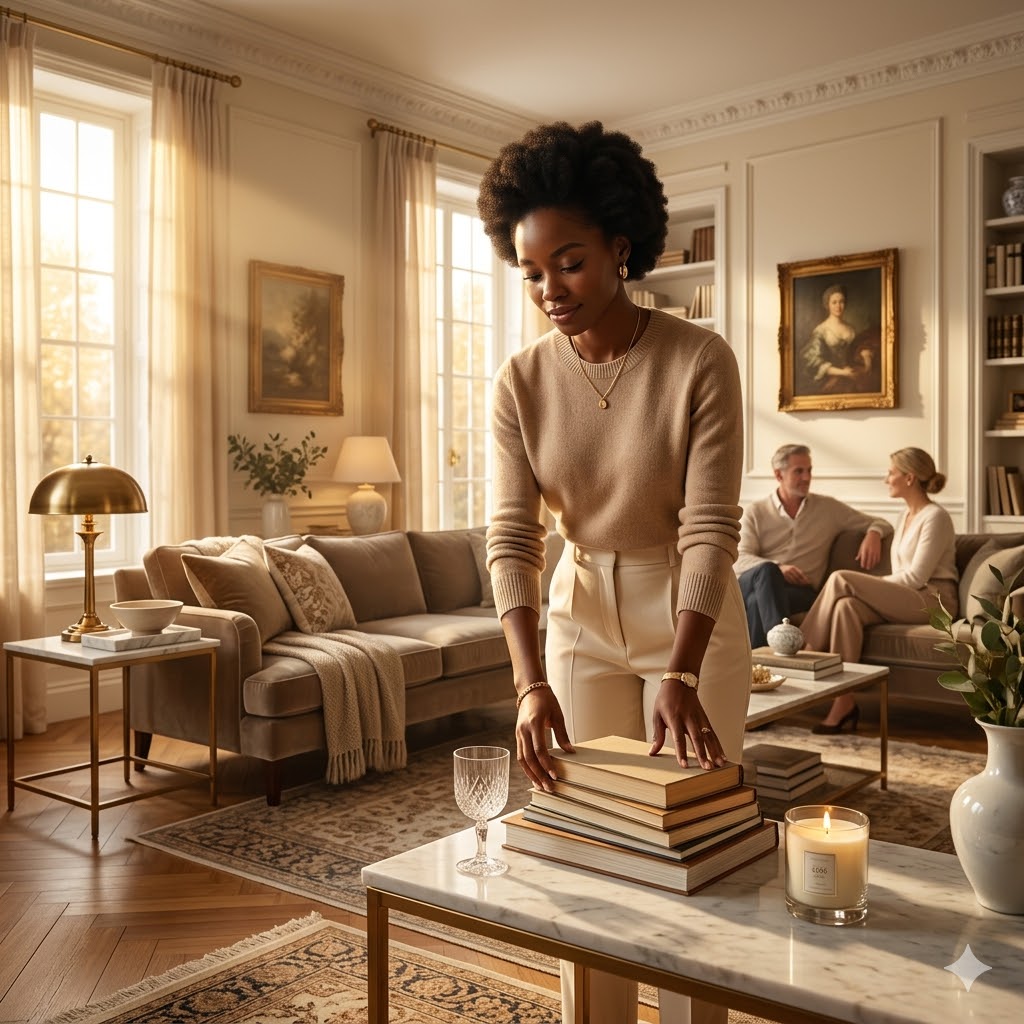
The old money aesthetic is built on the idea that true luxury is quiet, layered, and collected over time rather than purchased all at once in a single shopping spree.
Think of homes that feel like they have a story — where the Persian rug in the living room came from a grandmother’s estate, where the gilded mirror in the hallway has been hanging there for three generations, and where nothing feels like it was bought off a shelf and placed exactly where the box said it should go.
This style favors dark woods, neutral walls in cream or warm beige, heavy drapes that pool slightly on the floor, antique-inspired lighting, and textiles that have weight and texture to them.
It thrives on symmetry, balance, and the kind of careful curation that makes a room feel pulled together without feeling stiff or overdone.
The beautiful irony of old money home style is that a lot of it can be achieved with budget-friendly pieces when you know exactly what to look for and where to place them.
A single well-chosen brass candlestick on a mantle, a linen throw folded neatly over the arm of a chair, or a vintage-inspired lamp on a side table can shift the entire energy of a room in a matter of minutes.
These six pieces below are the ones that do the heaviest lifting for the least amount of money, and once you bring them home, you will understand immediately why they work so well.
1. A Persian-Inspired Area Rug That Anchors the Entire Room
There is almost no single décor purchase that does more work for a room than a Persian-style rug, and this is the piece that old money interiors are almost never without.
Walk into any classic estate home, any well-appointed study, or any formal living room that has that deep sense of heritage and history, and you will almost always find a richly patterned rug on the floor doing the quiet work of tying everything together.
The traditional Persian or oriental rug in its authentic form can cost thousands of dollars and require careful sourcing from specialist dealers or auction houses, but the good news is that affordable replicas have improved dramatically in quality over the past several years.
Brands like Safavieh and Artistic Weavers, both widely available on Amazon and at stores like HomeGoods and TJ Maxx, produce machine-made Persian-inspired rugs in deep reds, navy blues, and warm burgundy tones that photograph beautifully and feel genuinely luxurious underfoot.
For a smaller accent rug in a hallway or under a coffee table, you can regularly find solid options in the $30 to $50 price range, and placing one of these in a room immediately signals a certain level of taste and intention that bare floors simply cannot communicate.
The pattern depth of a Persian-style rug also adds visual complexity to a room in a way that draws the eye downward and makes the entire space feel more layered, more considered, and far more expensive than it actually was to assemble.
When styling your rug, make sure at least the front two legs of your sofa or chairs are sitting on top of it, because floating furniture on a rug that is too small is one of the most common mistakes that undermines this look entirely.
This is the one piece on this list that most immediately communicates old money home style the moment someone walks into the room, and it is absolutely worth making it your first purchase.
2. Brass or Gold Hardware That Transforms Furniture Instantly
Old money home style on a budget almost always involves a strategic upgrade of the small metal details in a room, and nothing does this more efficiently than swapping out your existing cabinet and drawer hardware for brass or antique gold alternatives.
Modern homes are full of brushed nickel, matte black, and chrome hardware — all of which read as contemporary, clean, and current — but none of which carry the warm, collected, heirloom quality that old money interiors rely on so heavily.
Brass, whether in a polished, satin, or antique finish, has a warmth and depth to it that feels like something that has been in a family for decades, and it pairs beautifully with dark wood furniture, cream walls, and the layered textiles that define this aesthetic.
A set of solid brass cabinet knobs from brands like Cosmas Hardware or Liberty Hardware, both available on Amazon for well under $50 for a set of ten, can completely transform the look of a dresser, a kitchen cabinet, or a bookshelf in under an hour without any professional help.
If you want to save even more money, here is a trick that works remarkably well: remove your existing hardware, lay it flat on a piece of cardboard outside, and apply two or three thin coats of Rust-Oleum Metallic Gold spray paint followed by a few coats of clear lacquer to protect the finish.
The lacquer step is important because hardware takes a lot of handling, and without a protective topcoat, the paint will begin to chip and wear within a few weeks.
Done properly, spray-painted brass hardware is genuinely difficult to distinguish from the real thing, and this method can transform an entire kitchen’s worth of cabinet hardware for under $15 total.
This is one of those old money interior design details that professionals charge hundreds of dollars to advise clients on, and you can execute it yourself on a quiet Saturday afternoon.
3. Vintage-Inspired Lighting With Fabric Shades
Lighting is the single most underrated element in interior design, and in old money home style, the choice of lamp or fixture can either make a room feel authentically elegant or reveal immediately that the look was assembled without a true understanding of what drives this aesthetic.
The ceiling fixtures and table lamps found in old money interiors share a specific set of characteristics: they tend to be warm in tone, often feature antique brass or bronze metalwork, and almost always have fabric shades rather than glass or plastic ones.
Fabric shades — particularly in cream linen, ivory silk, or warm white cotton — diffuse light in a way that creates a soft, amber glow throughout a room, and that warm diffused light is absolutely central to the feeling of comfort and refinement that old money spaces are known for.
Table lamps with a ceramic, brass, or dark wood base topped with a drum or empire-shaped fabric shade can be found at TJ Maxx, HomeGoods, and on Amazon from brands like Cal Lighting and Regency Hill for $30 to $50, and they bring an immediate sense of intentionality to any surface they sit on.
Secondhand shops and thrift stores like Goodwill are also outstanding sources for vintage or vintage-inspired lamps, and finding one at a thrift store for $8 and replacing the shade with a clean cream fabric shade from Amazon is a classic interior design move that costs almost nothing.
Placement matters enormously with lighting in old money interiors — lamps belong on side tables flanking a sofa, on nightstands in pairs for symmetry, on console tables in entryways, and on writing desks in studies or home offices.
The symmetry of twin lamps on either side of a sofa or bed is one of the most recognizable signatures of old money home style, and it communicates balance and intention in a way that a single mismatched lamp simply cannot.
Never underestimate the power of a well-chosen lamp to completely change the emotional register of a room at the flip of a switch.
4. Classic Art Prints in Ornate Gold Frames
Old money home décor on a budget absolutely relies on the art-and-frame combination, and this is one of the areas where you can get genuinely dramatic results for very little money if you approach it with the right strategy.
The walls of old money interiors are never bare, and they are rarely decorated with the kind of abstract canvas prints or motivational typography that became so prevalent in home décor over the past decade.
Instead, they feature oil painting reproductions, landscape prints, botanical illustrations, portrait paintings, and classical still lifes — the kind of imagery that suggests a family with a long history of collecting and appreciating fine art even if the pieces themselves are not originals.
Websites like Art.com, Society6, and even Amazon offer high-quality reproductions of classic paintings and botanical prints for under $20, and the frame you put them in matters far more than the print itself when it comes to achieving the old money look.
An ornate gold or antique gilt frame — the kind with carved or embossed detailing around the border — elevates almost any print inside it to a level of visual sophistication that a simple black or white frame simply cannot achieve.
Thrift stores, Goodwill locations, and estate sales are legendary sources for exactly these kinds of frames, and this is a tip worth taking seriously: even if the original picture inside the frame is completely hideous, the frame itself may be exactly what you need.
Remove the original artwork, measure the opening, order a print in the correct size, and you have a piece that looks like it came from a high-end gallery for a total investment of under $25.
This layered approach to building your art wall over time — mixing thrifted frames with reproductions from different sources — is precisely what gives old money walls their sense of depth and authenticity.
5. Velvet or Linen Throw Pillows That Add Texture and Weight
The fabrics in an old money room are one of the first things visitors register on a subconscious level, even if they cannot immediately articulate why the space feels so much more expensive and considered than a room of similar size and furniture.
Old money home style is deeply committed to textiles with weight, texture, and visual depth — and the two fabrics that do this job most effectively at an accessible price point are velvet and linen.
Velvet, particularly in jewel tones like deep forest green, rich navy, dusty rose, or burgundy, has an immediate visual and tactile luxury to it that reads as classic and refined rather than trendy, and a set of two velvet throw pillows on a sofa can shift the entire mood of a living room.
Linen, on the other hand, in its natural undyed state or in warm whites and soft grays, brings a crispness and understated elegance that feels almost European in its sensibility — the kind of fabric you expect to find in a country house in Provence or a manor in the English countryside.
Amazon carries excellent options from brands like MIULEE and Crayola Home in both velvet and linen pillow covers for under $15 per pair, and the upgrade from cheap polyester pillows to velvet or linen ones is immediately visible and impressive to anyone who enters the room.
The key to using throw pillows in the old money style is restraint — two or three well-chosen pillows in complementary tones will always look more intentional and elegant than a pile of mismatched accent pillows fighting for attention.
Mix a velvet pillow in a deep jewel tone with a linen pillow in a neutral cream or warm ivory on the same sofa, and you will begin to see the old money layering principle come to life right in front of you.
This is the kind of small, affordable change that you can make on a Tuesday afternoon and come home to a noticeably different living room by Tuesday evening.
6. An Ornate Mirror That Brings Light, Depth, and History Into Any Space
The gilded mirror is perhaps the single most iconic piece in the entire old money interior design vocabulary, and it earns that distinction by doing several jobs at once in a way that almost no other single décor piece can replicate.
A well-chosen ornate mirror with a gold or antique bronze frame reflects light around a room, making spaces feel larger and more luminous, adds an immediate sense of history and heritage to whatever wall it hangs on, and serves as a focal point that anchors the entire visual composition of the room.
Old money home décor on a budget frequently leans on mirrors as a high-impact, relatively low-cost investment, and the market for affordable ornate mirrors has expanded significantly in recent years as the aesthetic has grown in popularity.
Brands like Uttermost and Kate and Laurel produce beautiful ornate gold and antique bronze framed mirrors in smaller accent sizes for under $50, and these are available through Amazon, Wayfair, and occasionally HomeGoods when stock allows.
For the most dramatic old money effect, hang your ornate mirror above a fireplace mantle, above a console table in an entryway, or leaning against a wall in a bedroom or study rather than hanging it flush — the leaned look has a particularly collected, lived-in quality that suits this aesthetic beautifully.
If you find a beautiful antique frame at a thrift store or estate sale, even without a mirror in it, a local glass shop can cut a mirror panel to fit the opening for a very reasonable cost, and the result will be a truly unique piece that looks like it has been in a family for generations.
Pairing your ornate mirror with a pair of brass candlesticks or a small floral arrangement on the surface below it — whether that is a mantle, a console, or a dresser — creates the kind of intentional vignette that old money interiors are built from.
This is the piece that, more than almost any other on this list, makes guests stop, look twice, and wonder quietly whether your home has always looked this elegant or whether something recently changed.
Final Thoughts: Start Small, Build Slowly, and Let the Story Unfold
The most important thing to understand about old money home style is that it was never meant to be assembled in a single afternoon.
The reason these interiors feel so genuine and layered is precisely because they look like they have been built up over years — one rug, one lamp, one gilded mirror at a time — rather than pulled from a shopping cart in a single session.
Start with one piece from this list, the one that excites you most or fits most naturally into a room you already love, and let it change how that room feels before you move on to the next one.
Old money home décor on a budget is less about spending and more about choosing with intention, understanding which details carry the most visual weight, and having the patience to let a room develop its own story over time.
None of the six pieces on this list requires a large investment, but together they create something that feels genuinely rich, genuinely curated, and genuinely timeless in all the right ways.

We strongly recommend that you check out our guide on how to take advantage of AI in today’s passive income economy.