How to Style Your Home Like a Designer Without Spending a Designer’s Budget
Old Money Style Is Not About Spending More Money
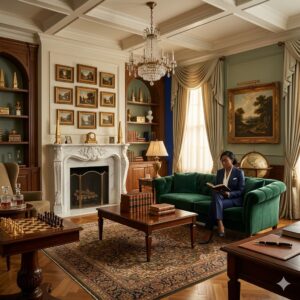
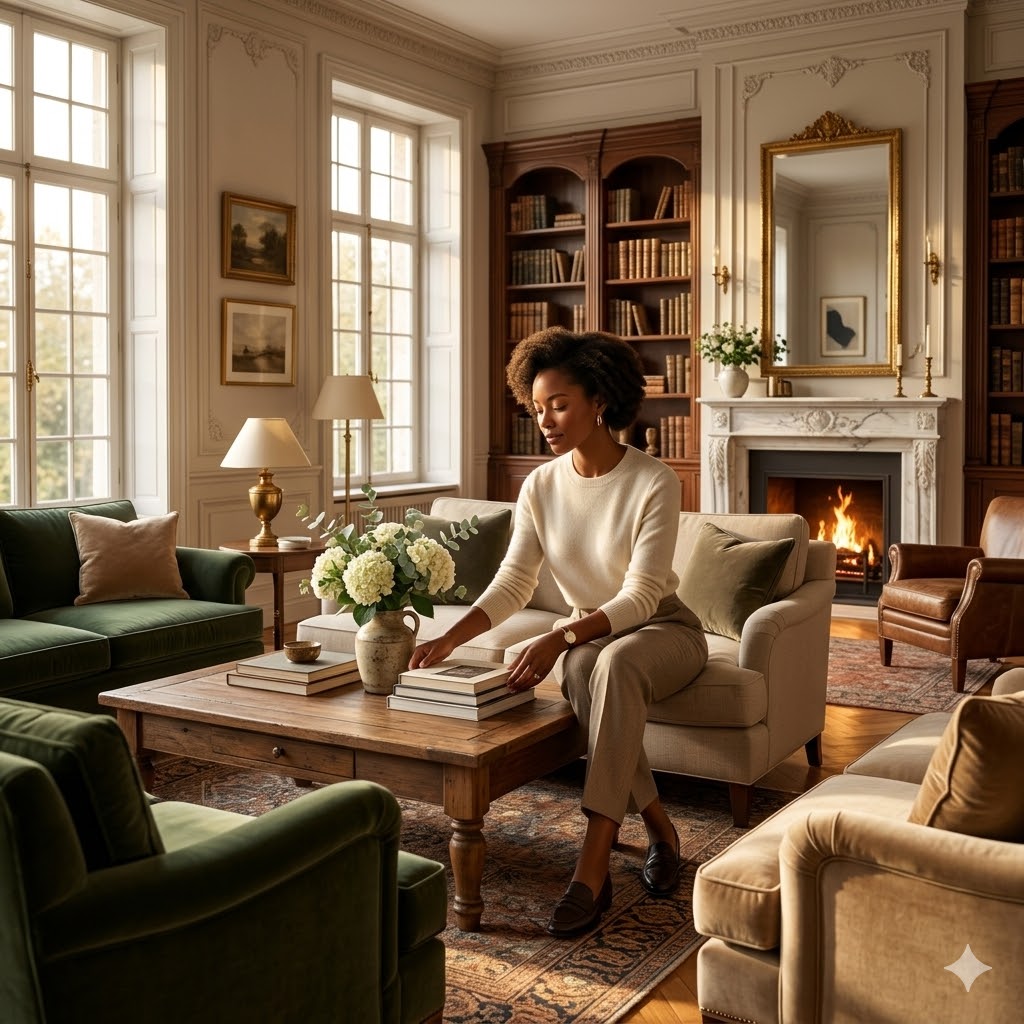
Old money home decor aesthetic is built on one quiet, powerful truth — the most expensive-looking homes are never the ones that shout the loudest.
They whisper.
They pull you in with texture, proportion, and detail that feels deliberate, refined, and deeply considered.
This is the world of old money style — not flashy, not trendy, and never trying too hard.
The good news is that you do not have to inherit a mansion or a trust fund to achieve this look inside your home.
Most of the secrets that make a room feel wealthy and timeless are rooted in simple styling decisions, paint choices, furniture placement, and the kind of thoughtful details that cost very little but deliver enormous visual impact.
In this article, you are going to learn exactly how to bring that quiet luxury look into your home in 2026, one room at a time.
Every tip here is practical, budget-friendly, and designed to help you see your existing space in a completely new way.
We strongly recommend that you check out our guide on how to take advantage of AI in today’s passive income economy.
Table of Contents
Secret 1 — Decorate the Blind Spots Most People Completely Ignore
One of the fastest ways to achieve the old money home decor aesthetic in your space is to pay attention to the areas that most people walk past every single day without ever seeing.
These are called blind spots — the spaces just above your door frame, the narrow wall beside a window, the small corner at the end of a hallway, or the low floor-level area that sits between two pieces of furniture.
Old money interiors never have dead zones.
Every inch of a well-styled room feels intentional, and that intentionality is exactly what signals wealth to the eye.
Above your door frame, for example, you could install a floating shelf styled with a single piece of pottery or a stack of linen-bound books to instantly bring the ceiling height to life.
You could also add a door pediment — an architectural detail placed above the door frame that gives the illusion of a grander, more custom-built space — similar to the kind of trim details you would find in homes featured by Architectural Digest.
At the floor level, the same principle applies.
A small wooden stool placed thoughtfully against a wall, or a low ceramic pedestal holding a sculptural vase near a corner, adds layers of visual interest that make a room feel styled rather than simply furnished.
Secret 2 — Mount Your Art Inside Your Bookcase, Not Just on the Wall
A Simple Repositioning That Changes Everything
Most people lean a small framed print inside a bookcase and call it done, but old money home decor interior styling takes that same piece of art and turns it into a design moment.
Instead of leaning your wall art loosely against the back wall of your bookcase, mount it directly onto the back panel using a small hook or a picture-hanging strip like the Command Picture Hanging Strips from 3M, which are damage-free and hold surprisingly well.
You can also mount a piece of art on the outer edge of your bookcase, so it overlaps the shelving structure and creates the look of a custom gallery wall that feels curated and deeply considered.
This single change removes the casual, afterthought energy from your bookcase and replaces it with a finished, editorial quality that interior designers use constantly in high-end homes.
The reason this works so well within the old money luxury home styling framework is that it communicates thoughtfulness — the idea that someone spent real time deciding where each piece should live.
Reimagining the pieces you already own and displaying them in a more intentional way is one of the most underrated decorating skills in 2026.
You do not need to buy anything new to transform a room.
You simply need to see your existing pieces with fresh eyes.
Secret 3 — Go Monochromatic and Watch the Room Expand Instantly
There is something deeply chic and timeless about a monochromatic room, and it is one of the core principles behind the old money home decor aesthetic that designers have relied on for decades.
A monochromatic space is one where the walls, trim, and furniture all follow the same color family — varying in shade and tone but unified in hue — and the result is a room that feels larger, calmer, and exponentially more expensive.
To achieve this on a budget, start by identifying the dominant color of your largest furniture piece — your sofa, your bed frame, or your main dining chairs.
Then select a wall paint in a shade that sits within the same color family.
Farrow and Ball, the British paint company known for supplying some of the world’s most prestigious homes, offers shade collections specifically designed to support this kind of tonal layering, but you can achieve the same result with more accessible brands like Behr or Sherwin-Williams.
If your sofa is a warm walnut brown, painting your walls a soft caramel or deep mocha creates a room that wraps around you rather than cutting itself into competing fragments.
The key to a successful monochromatic old money styled room is contrast within the palette — lighter and darker shades of the same color stacked against each other so the room has depth rather than flatness.
This is a technique used consistently by interior designers like Axel Vervoordt, whose work is widely associated with the quiet, restrained luxury that defines old money interiors.
Secret 4 — Swap Table Lamps for Wall Sconces in the Bedroom
One Change That Turns a Bedroom Into a Hotel Suite
If there is one single swap that captures the old money home decor luxury bedroom look more than any other, it is replacing your bedside table lamps with wall-mounted sconces.
Wall sconces draw the eye upward, open up your nightstand surface, and cast light in a way that feels theatrical and deeply considered — like something you would find in a five-star property designed by a firm like AD100-listed studio Roman and Williams.
You do not need to rewire your walls to make this happen.
Plug-in sconces are widely available through retailers like Pottery Barn, Rejuvenation, and even Amazon, and many of them are designed to look completely hardwired once they are installed.
Battery-operated sconces are another option for renters who cannot put holes in walls, with brands like IKEA offering affordable versions that work well in low-traffic lighting applications.
The visual effect of sconces in a bedroom is immediate.
The room stops looking like a generic furnished space and starts feeling like a destination — a room that was designed rather than assembled.
That distinction is at the heart of every old money aesthetic home interior — the feeling that someone with very good taste made very deliberate choices.
Secret 5 — Choose Roman Shades Over Blinds Every Single Time
Window treatments are one of the most overlooked elements in home decor, and choosing the wrong ones is one of the fastest ways to make a beautifully furnished room feel unfinished.
Old money home decor window styling almost always favors Roman shades over standard horizontal blinds, and for good reason.
Roman shades — especially those made in natural linen, woven cotton, or a textured neutral fabric — bring softness, structure, and architectural detail to a window all at once.
They have the clean, folded elegance of a well-pressed shirt, and they layer beautifully with drapes or curtains if you want to build a more layered, multi-textured window treatment.
For pattern-forward spaces like a powder room, laundry room, or reading nook, a subtly patterned Roman shade in a small geometric or botanical print can add just the right amount of personality without overwhelming the space.
For custom Roman shades tailored to non-standard windows, companies like The Shade Store offer made-to-measure options with a wide range of fabric selections.
For more budget-conscious shoppers, Smith and Noble and Wayfair both carry linen-blend Roman shades that deliver a high-end look at a fraction of the price.
The goal in old money luxury home styling is always to choose window treatments that feel considered — and Roman shades, with their tailored fold and clean silhouette, always do exactly that.
Secret 6 — Use Sculptural Furniture to Replace Missing Architecture
When Your Walls Are Plain, Your Furniture Does the Work
Not every home was built with soaring ceilings, arched doorways, and crown molding, but that does not mean your space has to feel architecturally flat.
In old money home decor, sculptural furniture fills the role that architectural detail plays in grander spaces, giving the eye something interesting to rest on without requiring a single renovation.
Accent chairs are the most accessible entry point into sculptural furniture.
A curved, barrel-back chair in a boucle or velvet fabric immediately introduces a sense of form and intention that a standard square-back chair simply cannot.
Brands like CB2 and West Elm offer sculptural accent seating at accessible price points, while French vintage-inspired pieces from Anthropologie Home tend to deliver a more distinctly old money feel.
Think about chairs with visible negative space in their frames, organic curves, or unusual proportions — these are the pieces that read as designed rather than bought.
The same principle applies to side tables, floor lamps, and decorative objects.
A side table with a sculptural concrete or travertine base, a floor lamp with an arched neck and sculptural stem, or a ceramic vase with an irregular, hand-formed shape all contribute to that old money aesthetic home interior feeling of curated sophistication.
Secret 7 — Add Wall Trim, Molding, or Textured Paint for an Instant Custom Look
One of the defining visual signatures of old money interiors is textured, detailed walls — and in 2026, there are more ways than ever to achieve this look without major construction.
Tongue and groove paneling, picture frame molding, beadboard, and vertical shiplap are all classic wall treatments that add depth, character, and that handcrafted, old-world quality that defines old money home decor elegance.
If attaching panels to your walls is not an option due to renting restrictions or budget constraints, limewash paint and Roman clay are two of the most exciting alternatives available right now.
Portola Paints, a California-based brand, produces a widely praised Roman clay paint that creates a rich, dimensional, Old World texture on walls without requiring any professional plastering skills.
Romabio, an Italian company, offers authentic limewash paint products that deliver that chalky, lived-in, antiqued wall finish seen in the most coveted European-influenced interiors.
When applied to all four walls and up onto the ceiling, these paints create a total immersion effect — a room that feels like it has always existed, like it was inherited rather than decorated.
That feeling of timelessness is the foundation of old money luxury home styling, and it is one of the most powerful tools available to any homeowner willing to pick up a brush.
Secret 8 — Use Symmetry to Instantly Make a Room Feel Designed
Symmetry is one of the oldest and most reliable design tools in the world, and it is used consistently throughout old money home decor aesthetic interiors to create that sense of calm order and polished intention.
A room with strong symmetry does not need expensive furniture or rare antiques to feel expensive — it simply needs balance.
Twin table lamps placed on matching bedside tables on either side of a bed.
A pair of accent chairs flanking a fireplace or sofa.
Matching sconces on either side of a headboard or mirror.
Paired vases on a mantle with a centered piece of art above.
These arrangements create a visual rhythm that signals care and consideration — the exact qualities that define old money styled home interiors.
The easiest and most affordable way to introduce symmetry into any room is through lighting.
A set of two matching table lamps from brands like Lamps Plus or Crate and Barrel instantly anchors a room and gives it the kind of composed, balanced energy that interior designers charge thousands of dollars to achieve.
Symmetry also extends to furniture layout — if you have a sofa, consider adding two matching side chairs rather than one, so the seating arrangement reads as a complete, balanced composition rather than a random collection of pieces.
Secret 9 — Embrace Dark, Moody Colors in Small Spaces
The Bold Decision That Always Looks Designer
The old money home decor approach to small spaces is counterintuitive, and it works every time.
While conventional decorating advice tells you to paint small rooms white to make them feel larger, old money interior styling takes small spaces and leans deeply into drama — using dark, saturated paint colors to turn a compact room into what designers call a jewel box.
A mudroom painted in deep forest green, a powder bath drenched in navy blue, or a pantry finished in charcoal black all carry the same energy — bold, intentional, and unmistakably designed.
Paint brands like Farrow and Ball are famous for their deep, complex dark shades — colors like Railings, Hague Blue, and Down Pipe — which have become synonymous with the kind of quiet, understated drama found in old money-influenced homes worldwide.
Benjamin Moore’s Aura line also delivers beautifully in deep colors, with rich pigmentation that holds up brilliantly against accent lighting.
In a small dark space, lighting becomes your best friend.
A single brass pendant or a pair of candle-style wall sconces inside a moody pantry or bathroom creates a glow that feels intimate, luxurious, and deeply considered.
Small spaces are not limitations in old money home decor — they are opportunities to make a statement.
Secret 10 — Remove the Glass From Your Framed Art
This final secret is so simple it almost feels too good to be true, but the effect it produces is remarkable and completely free.
Most budget-friendly framed art — the kind you find at Target, HomeGoods, or IKEA — comes with a sheet of glass or plastic in front of the print designed to protect it from dust and moisture.
That glass, however well-intentioned, is also doing something else: it is making your art look like a poster.
The reflective surface creates glare from different angles, flattens the visual texture of the print beneath it, and gives the piece a mass-produced, retail quality that works against everything the old money home decor aesthetic stands for.
Removing the glass changes everything immediately.
Without it, a simple printed canvas from Target can look like an original painting.
The colors appear richer and truer.
The surface texture becomes visible and tactile.
You can appreciate the art from every angle in the room without fighting glare.
This is the kind of detail that distinguishes a truly styled home from one that is merely furnished — and it costs absolutely nothing.
If you are concerned about protecting your prints, simply hang them away from direct sunlight and high-humidity areas like bathrooms, and the art will hold up beautifully for years.
Conclusion — Old Money Style Is a Mindset, Not a Price Tag
The most important thing to understand about old money home decor aesthetic living is that it was never built on spending.
It was built on intention.
It was built on the willingness to slow down, look carefully at what is already in a room, and make small, deliberate decisions that add up to something that feels deeply considered and quietly extraordinary.
Every secret in this article costs far less than most people assume.
Removing a piece of glass from a frame costs nothing.
Adding a second accent chair costs less than a dinner out.
Painting a small bathroom a deep, moody color costs under $50 in most markets.
The old money luxury home styling approach is not about what you add — it is about how you see, how you arrange, and how you commit to the kind of intentional detail that makes every room feel like it was designed by someone with very good taste and absolutely no need to prove it.
Apply even three or four of these secrets this weekend, and your home will never look the same again.

We strongly recommend that you check out our guide on how to take advantage of AI in today’s passive income economy.