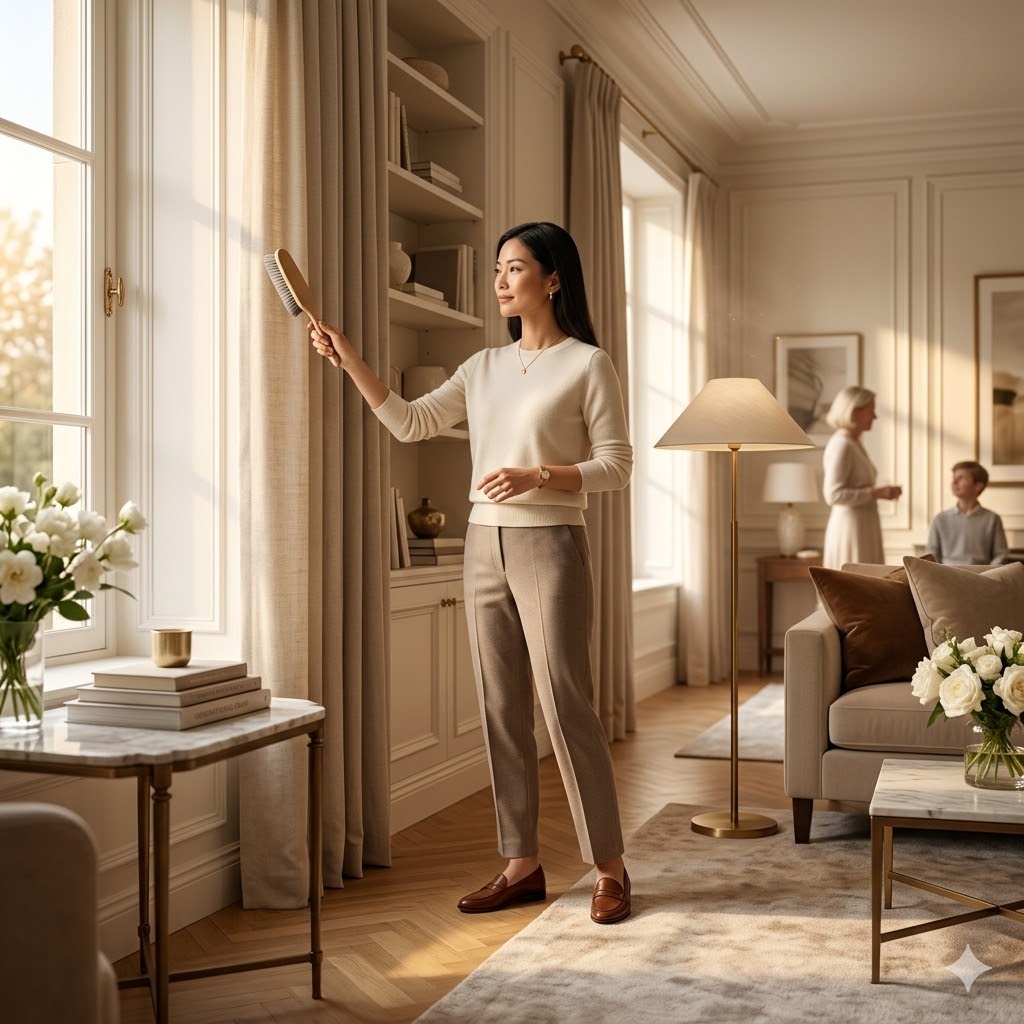
How to Create a Home That Feels Calm, Refined, and Expensive Without Chasing Trends
Some rooms walk into your memory and never leave.
Not because they were filled with expensive things or covered in designer labels, but because they felt a certain way — settled, warm, layered, and deeply considered — and that feeling is exactly what quiet luxury home decor upgrades that embrace old money sensibility are built to create.
You did not need a six-figure renovation budget to achieve that feeling.
You needed the right understanding of color, texture, light, and restraint.
Quiet luxury is not a trend that will fade by next season.
It is a design philosophy rooted in quality over quantity, in choosing fewer things that are made well rather than filling every corner with things that look busy.
In 2026, more homeowners and renters alike are moving away from maximalist styling and turning toward spaces that breathe, spaces that hold warmth without shouting it.
This article is your complete guide to achieving that look in your own home, room by room, layer by layer, upgrade by upgrade.
We strongly recommend that you check out our guide on how to take advantage of AI in today’s passive income economy.
Table of Contents
What Quiet Luxury Home Decor Actually Means Before You Spend a Single Dollar
Before you move a single piece of furniture or repaint a single wall, you need to understand what this design language is actually saying.
Quiet luxury home decor ideas rooted in old money aesthetics are not about making your home look expensive for the sake of impressing visitors.
They are about creating an environment that feels good to live inside every single day.
The word “quiet” in this context refers to restraint — spaces that do not compete for your attention, rooms that allow your eye to rest naturally on beautiful details without visual noise crowding the experience.
The word “luxury” in this context does not automatically mean high price tags.
It means comfort designed with intention, materials chosen for how they feel under your hands and feet, and a sense that every object in the room earned its place.
When you combine those two ideas, you get interiors that feel calm and considered, the kind that photograph beautifully in natural light and feel even better to walk into after a long day.
The upgrades in this guide follow that philosophy precisely, and you will find that most of them begin not with shopping, but with editing.
Upgrade 1 — Build Your Color Palette Around Muted, Nature-Inspired Tones
Why Your Wall Color Is the Foundation of Everything Else
The single most powerful thing you can do to shift your home toward a quiet luxury home decor approach built on old money restraint is to change how you think about color.
Forget bold feature walls in saturated jewel tones and forget the stark, cold white that became so popular in the minimalism wave of the early 2010s.
Quiet luxury lives in the space between those two extremes, in the warm off-whites, the layered creams, the soft ivory, and the gentle beige that wrap a room like good cashmere.
Paint brands like Farrow and Ball and Benjamin Moore both offer extensive ranges that fit this palette perfectly — Farrow and Ball’s “Elephant’s Breath,” “Cornforth White,” and “Skimming Stone” are real, widely used references that professionals reach for when building this kind of interior.
Benjamin Moore’s “White Dove,” “Pale Oak,” and “Revere Pewter” serve a similar function at a slightly more accessible price point.
For grounding tones that prevent the palette from feeling too soft or washed out, you introduce deeper anchors: rich charcoal, dark chocolate brown, deep olive, and warm black used sparingly in furniture, trim, or textile choices.
If you want a whisper of actual color, pull from nature directly — soft sage, muted eucalyptus green, dusty terracotta, and faded slate blue all sit comfortably inside this palette without disrupting the calm it creates.
Layering similar shades across different textures — a cream linen cushion against an ivory cotton sofa against an off-white plaster wall — creates tonal depth that feels sophisticated rather than flat, and that is the core technique behind every room that earns this description.
Upgrade 2 — Add Architectural Details That Look Like They Were Always There
Moldings, Paneling, and Arches Are the Marks of a Well-Considered Home
One of the clearest signals of old money interior design — one that quiet luxury home decor transformations almost always include — is the presence of architectural detail that looks completely permanent, as though the house itself was built with intention and taste from the very beginning.
You can feel the difference in a room that has well-proportioned crown molding, a coffered ceiling, or wall paneling that runs from baseboard to chair rail height.
The room has structure and dimension that paint alone cannot create.
Adding picture rail molding, board and batten paneling, or simple wainscoting to a flat wall is a DIY-accessible upgrade that costs relatively little in materials but adds enormous visual weight and character to a space.
Fluted detail — the vertical channel pattern you see on columns, furniture legs, and cabinetry — has become the signature architectural texture of quiet luxury interior design in 2026 and reads as both classical and contemporary depending on how it is used.
Curved archways between rooms or as cabinet door treatments soften the hard geometry that dominates modern builds and bring the organic quality that this aesthetic values.
Natural stone fireplaces, where existing, should always be the focal point of the room they anchor — if you have one, strip it of clutter and let it speak for itself.
Built-in cabinetry that reaches floor to ceiling with simple, clean profiles signals the kind of considered permanence that distinguishes a thoughtfully designed home from one that was furnished on a weekend.
Upgrade 3 — Choose Flooring That Feels Natural and Timeless Underfoot
Your Floor Sets the Sensory Tone for Everything That Sits Above It
Flooring is one of those design decisions that people underestimate until they get it wrong, and in quiet luxury home decor inspired by generational wealth and timeless taste, the floor is never an afterthought.
The materials that belong in this aesthetic are all natural, tactile, and built to age gracefully rather than show wear poorly.
European oak timber flooring — wide plank, wire-brushed or lightly oiled rather than high-gloss lacquered — is the gold standard in this category, offering warmth, grain variation, and a feeling of solidity that no engineered laminate can genuinely replicate.
Walnut flooring brings even deeper richness and works particularly well in rooms that lean toward darker, more grounded palettes.
In areas where stone makes more sense — entryways, kitchens, bathrooms — limestone, travertine, and honed marble deliver the visual weight and natural variation that signals quality immediately.
Honed finishes matter here: polished marble reads as a hotel, but honed marble reads as a home with taste and experience.
In bedrooms, wall-to-wall carpet in soft neutral tones — oatmeal, warm grey, or pale taupe — introduces a quiet luxury that is purely sensory, the feeling of stepping onto something warm and yielding first thing in the morning.
In living and dining spaces, natural fiber area rugs in jute, sisal, or wool blends anchor furniture groupings and should always be sized generously — large enough that all dining chairs sit fully on the rug, or at minimum, so that the front legs of every sofa and armchair make full contact with it.
Upgrade 4 — Layer Your Lighting Instead of Relying on a Single Overhead Source
The Difference Between a Bright Room and a Beautiful Room Is Almost Always Lighting
Lighting is the upgrade that designers consider most underestimated by homeowners, and it is one of the defining elements of spaces that feel expensive, calm, and worthy of the quiet luxury home decor label that more people are reaching for this year.
The core principle is simple: eliminate the single, central overhead light as your primary source and replace that reliance with a layered plan that moves through three levels of the room.
The first layer is natural light, and in homes where windows allow it, every window treatment decision should prioritize maximizing how much of it enters a room during daylight hours.
The second layer is low-level lighting — table lamps and floor lamps placed at seated eye level — and this is where rooms gain warmth, intimacy, and a quality of light that no overhead fixture can provide.
Real examples of brands whose lamp designs align with this aesthetic include GUBI, whose furniture and lighting collections are rooted in Scandinavian craftsmanship, and Visual Comfort, an American lighting house whose range spans classic and contemporary designs with a consistent quality of finish.
Wall sconces used as a mid-level lighting layer highlight architectural features, frame artwork, and add visual interest to long or awkward corridors that would otherwise read as flat and forgotten.
Overhead lighting, when needed, should always be fitted with a dimmer and chosen for warmth — soft recessed downlights, pendants with fabric or glass diffusers rather than bare bulbs, or chandeliers that cast light upward and outward rather than straight down.
Candlelight deserves a mention here because it is irreplaceable: a room with a lit candle feels inhabited and alive in a way that even the most thoughtful electric lighting cannot fully replicate.
Upgrade 5 — Hang Window Treatments High, Wide, and in the Right Fabric
Curtains That Pool Gently at the Floor Are One of the Oldest Signals of a Well-Dressed Room
Window treatments are the element that most dramatically changes the perceived height, scale, and elegance of a room, and they are one of the most reliable quiet luxury home decor upgrades that signal old money refinement because the technique involved is a matter of knowledge, not expense.
The rule is consistent across every professional interior designer’s practice: hang your curtain rod as close to the ceiling line as possible, not just a few inches above the window frame, and extend it six to twelve inches beyond the window on each side.
This simple shift makes windows look larger than they are, makes ceilings feel taller than they measure, and allows curtains to frame the window like architecture rather than just covering it.
Fabric choice matters deeply in this context — the materials that belong here are linen, heavyweight cotton, silk blends, and velvet for colder months, all in colors that complement the room’s palette rather than compete with it.
Linen in particular has become the defining curtain fabric of quiet luxury interior design in 2026 because it drapes softly, creases naturally in a way that reads as relaxed elegance rather than carelessness, and improves in texture as it ages.
The hem should touch the floor or puddle very slightly — nothing more than an inch or two — creating that gentle, settled quality that rooms in old English country houses and Parisian apartments have always possessed.
In bedrooms, layering sheer curtains or linen blinds behind the main drape gives you control over light at every hour while maintaining visual softness during the day.
Roller blinds in natural materials like flax or jute work as an excellent base layer that keeps the window treatment grounded in the same tactile, natural material vocabulary the rest of the room uses.
Upgrade 6 — Select Furniture for Craftsmanship and Comfort, Not Just Appearance
Every Piece in a Quiet Luxury Room Should Earn Its Place Twice — Once Visually and Once Physically
Furniture is where the quiet luxury home decor philosophy built around old money values becomes most concrete, because it is where the difference between a piece that was made well and a piece that merely looks it becomes undeniable over time.
The guiding principle here is less but better — fewer pieces chosen with greater care, each one allowed enough breathing room that its silhouette, material, and finish can register fully without being crowded out by neighbors competing for the same visual space.
Sofas in this aesthetic are typically deep-seated with tight or slightly loose linen or boucle upholstery, shaped by clean lines that may include a subtle curved back or softly tapered arm rather than the aggressively angled profiles common in more contemporary design.
Brands like Restoration Hardware, whose sofas and chairs are built with solid hardwood frames and deep cushions that hold their shape over years rather than months, and Arhaus, whose pieces are crafted with natural materials and genuine joinery techniques, are real, established names that consistently deliver this quality at scale.
Timber furniture in walnut, oak, or ash with simple, well-proportioned profiles and visible craftsmanship — dovetail joints, hand-applied finishes, solid rather than veneered construction — is the category that ages best and holds its visual integrity longest.
Marble surfaces — dining tables, coffee tables, side tables — bring the natural variation and tactile weight that synthetic alternatives spend enormous effort trying to imitate without success.
Mixing a few genuinely older or antique pieces with contemporary selections creates the layered, lived-in quality that old money interiors always possess, because rooms that look like they were decorated all at once in the same afternoon have a flatness that even expensive furniture cannot fully overcome.
Allow negative space to exist and resist the impulse to fill it — in quiet luxury rooms, the spaces between objects are as considered as the objects themselves.
Upgrade 7 — Layer Texture and Living Elements to Bring the Room to Life
When Color Is Muted, Texture and Living Things Become the Most Powerful Tools You Have
In a palette built primarily on neutrals, layering becomes the technique that prevents a room from feeling blank, cold, or unfinished — and in the quiet luxury home decor space defined by old money refinement and generational taste, this layering is almost always executed through texture and living elements rather than color or pattern.
Start with the walls: grasscloth wallcovering in a warm natural tone, linen weave textured paint, or a soft nature-inspired mural in muted tones creates a surface that interacts with light differently at different hours of the day, which gives the room a subtle dynamism that a flat painted wall simply cannot achieve.
Layer fabrics across the room with genuine intention — a velvet cushion beside a cashmere throw beside a linen pillow cover beside a wool blanket introduces five different surfaces that each reflect light differently and invite touch in different ways.
European-made linen brands like Libeco, a Belgian textile company founded in 1858 and genuinely renowned for their traditional flax weaving techniques, produce fabric that has a weight, drape, and softness that communicates quality before you can intellectualize the reason.
Artwork in this aesthetic should be bold in scale but restrained in tone — large muted abstracts, original oil paintings, or oversized tonal canvas prints that sit comfortably within the room’s palette rather than interrupting it.
Mirrors chosen for their frame — antique brass, aged timber, hand-hammered metal — serve both a practical and architectural purpose and should always be placed to reflect either natural light or a view worth doubling.
Decorative accessories are kept ruthlessly minimal: a few quality ceramics from makers like Heath Ceramics, whose work is made in California using natural clay bodies, or sculptural vessels, a curated collection of books, or a single meaningful object on a bare shelf.
Living plants bring the one quality that no object can simulate — genuine life — and a fiddle leaf fig, an olive tree in a terracotta planter, or seasonal branches of white blossom and eucalyptus introduce height, movement, and the sense that the room is tended to, which is perhaps the most fundamental signal of old money interior sensibility of all.
Bringing It All Together — The Room That Feels Right Before You Can Explain Why
The goal of every quiet luxury home decor upgrade built on old money restraint and generational taste is not to produce a room that photographs well on Instagram, though these rooms almost always do.
The goal is to produce a room that you never want to leave.
A room where the light at every hour feels considered, where every surface you touch feels like it was chosen with care, where the colors wrap around you like a well-worn coat, and where the absence of clutter lets you actually rest inside the space rather than be managed by it.
None of the seven upgrades in this guide require you to spend beyond your means.
They require you to think more carefully, edit more ruthlessly, and invest in fewer things of greater quality rather than many things of forgettable mediocrity.
Whether you begin with the curtains or the color palette or the furniture, you are participating in a design tradition that has nothing to do with showing wealth and everything to do with understanding it — the old money principle that the most refined things in any room are the ones that earn their presence through quality, longevity, and the quiet way they make you feel at home.
That feeling is available to every home in 2026.
You just have to know where to begin.

We strongly recommend that you check out our guide on how to take advantage of AI in today’s passive income economy.