6 Old Money Home Decor Secrets That Make Any Room Look Effortlessly Elegant
Old Money Color Palettes That Make a $300 Room Look Like a $3,000 Space
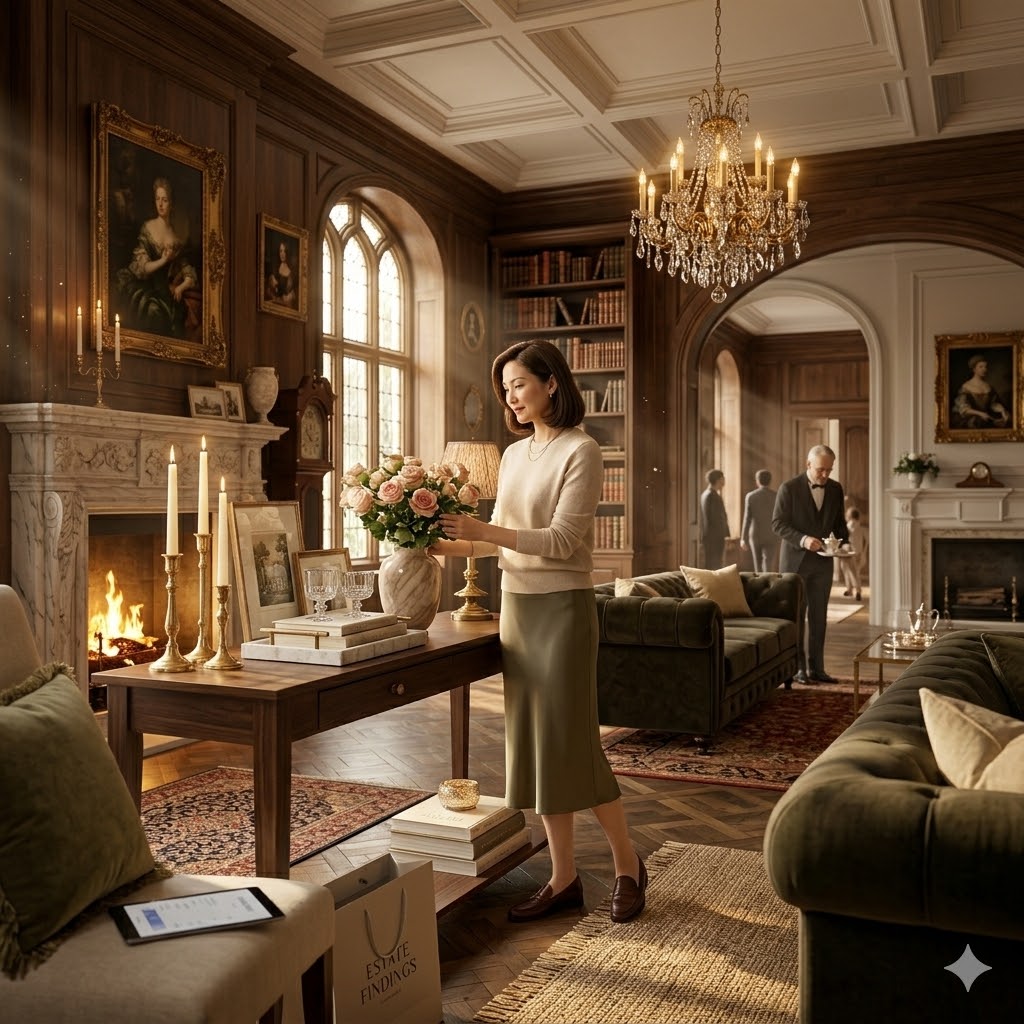
There is something deeply magnetic about the old money home decorating style that stops you the moment you walk through the door.
It does not shout.
It does not try.
It does not hang a neon sign that says “look how much this cost.”
Instead, it wraps around you like a well-worn cashmere sweater on a cold morning — warm, confident, and quietly perfect.
You notice the light hitting an old wooden side table just right.
You see a framed painting on the wall that looks like it has been in the family for decades.
You feel like time moves slower inside these walls, and somehow, that is the entire point.
This is not a trend that was born on social media and will die next season.
Old money home decorating style is rooted in something far older and far more lasting than any algorithm could manufacture.
And in 2026, as maximalism and fast furniture continue to flood home decor feeds, more people are returning to this quiet, dignified way of designing a home.
This article will walk you through exactly how generational wealth families have always approached their interiors, and why these choices age like fine wine rather than fast food.
We strongly recommend that you check out our guide on how to take advantage of AI in today’s passive income economy.
Table of Contents
What the Old Money Aesthetic Actually Means in a Home Setting
Most people confuse old money style with expensive style, and that is where the misunderstanding begins.
Old money home decorating style is not about price tags.
It is not about crystal chandeliers dripping from every ceiling or gold-plated fixtures on every faucet.
Real old money families — the kind whose grandparents’ grandparents built the dining table currently sitting in the kitchen — have always treated their homes as living collections rather than showrooms.
Think of a family home in coastal New England, passed down through three generations.
The sofa in the sitting room has a slight sag on the left cushion from decades of use.
The Persian rug underneath the coffee table has a faded center where feet have walked across it for thirty years.
The bookshelf along the far wall holds leather-bound editions of Dickens and Hemingway alongside a framed photograph of someone’s great-uncle at a sailing regatta in the 1960s.
Nothing in that room was bought to impress.
Everything in that room was kept because it meant something and lasted long enough to still be worth keeping.
That is the soul of old money home decorating style — things chosen with patience, layered slowly over time, and cared for rather than replaced.
The 6 Core Decorating Principles Old Money Families Have Always Followed
1. Timeless Over Trendy — Always
Old money families do not redecorate every time a new color trend appears on Architectural Digest’s Instagram page.
They choose pieces that looked good in 1975, look good now in 2026, and will still look dignified in 2050.
Classic furniture silhouettes — the Chesterfield sofa, the wingback chair, the pedestal dining table — are not popular because they are fashionable.
They are popular in these homes because they are structurally honest and visually balanced.
A Chesterfield sofa, for example, with its deep button tufting and rolled arms, has been a staple in British estate homes since the 18th century, and it integrates into a modern room today without looking out of place or costumey.
Old money home decorating style is built on this principle: if a piece would look strange in twenty years, it does not belong in the room today.
That simple filter alone eliminates ninety percent of what fills most trendy homes.
The result is a space that feels settled and complete rather than constantly being refreshed and updated.
2. A Muted, Natural Color Palette That Breathes
Walk into a home that follows old money home decorating style principles and you will notice the walls almost immediately.
They are never neon.
They are never stark white in that aggressive, sterile way that became fashionable in the mid-2010s.
Instead, you will find warm off-whites like Benjamin Moore’s White Dove or Farrow and Ball’s All White — colors that feel like cream rather than bleach.
You will find deep olive greens, the kind that makes a library feel like it has been there since the house was built.
You will find warm tobacco browns, dusty navies, soft terracottas, and quiet grays that shift in color depending on the quality of light coming through the window.
These colors were not chosen by trending algorithm.
They were chosen because they mirror the natural world — wood, stone, soil, moss, sea — and natural colors age gracefully rather than dating themselves.
Farrow and Ball’s Mole’s Breath, a warm mid-gray, and their Calke Green, a muted sage, are two real paint colors regularly cited by interior designers like Mark D. Sikes and Bunny Williams when describing homes that carry this exact visual weight.
The palette always works together.
Nothing clashes.
Nothing competes.
Everything in old money home decorating style simply coexists in a calm, unified tone.
3. Quality Over Quantity — The Fewer Pieces Rule
Old money families do not fill every surface.
They are not afraid of empty space.
In fact, in old money home decorating style, empty space is itself a design decision — it communicates restraint, and restraint communicates confidence.
Instead of buying eight average items, these families buy two exceptional ones.
A solid mahogany console table from a furniture maker like Ethan Allen’s heritage line or a piece sourced from an estate sale or antique dealer in Hudson, New York carries more visual weight than a room full of flat-pack alternatives.
The fewer-pieces rule also extends to accessories.
A mantelpiece in an old money home might hold three things: a tall antique clock, a small framed photograph, and a single candlestick.
That is it.
Three objects carefully placed on a wide surface create a composition.
Fifteen objects on the same surface create clutter.
Old money home decorating style understands this difference at a fundamental level, and it shows in the restraint of every surface, every shelf, and every corner of the home.
4. Natural Materials That Age Beautifully
Plastic does not belong in old money home decorating style.
Neither does anything that looks like it is trying to imitate a natural material without actually being one.
Real wood, real stone, real linen, real leather, real wool — these are the materials that define these interiors.
Oak flooring with a natural oil finish.
Marble countertops in a kitchen that has been in use for fifty years and shows every beautiful scratch of it.
Linen curtains that hang heavy and full from ceiling to floor, letting light filter through in a soft, diffused glow that synthetic fabric simply cannot replicate.
A wool tartan throw draped over the arm of a reading chair.
A sisal rug anchoring a bedroom floor.
These materials are chosen because they do not pretend to be anything they are not, and because they improve with age rather than deteriorating.
A leather club chair from a maker like Ralph Lauren Home or Restoration Hardware’s heritage leather collection develops a patina over years of use that makes it look more valuable, not less.
Old money home decorating style celebrates aging in its materials the way it celebrates aging in its architecture — as evidence of a life well lived rather than something to be hidden or replaced.
5. Traditional Structure with a Modern Exhale
One of the most nuanced qualities of old money home decorating style is how it holds tradition and modernity at the same time without letting either one take over completely.
An old money living room might have Georgian crown molding running along the ceiling, a fireplace surround with classical dentil detail, and antique side tables flanking a sofa — but that sofa might be upholstered in a clean, contemporary fabric.
The art on the wall might be a modern abstract piece beside a 19th century landscape painting.
The lighting fixture might be a simple, almost architectural ceiling pendant rather than an ornate chandelier.
This balance keeps the space from feeling like a museum and from feeling like a showroom.
Interior designer Bunny Williams, who has spent decades designing homes for wealthy American families, often describes this as the art of “layering time” — mixing periods and styles in a way that feels personal rather than curated.
The key is that every traditional element has a reason for being there beyond aesthetics.
It belongs because it fits the architecture of the room, because it was inherited, or because it was chosen with genuine intention rather than trend-following.
Old money home decorating style rewards that kind of intentional thinking at every turn.
6. Books, Art, and Objects That Tell a Real Story
Perhaps the most defining quality of old money home decorating style is that the homes feel inhabited by real people with real histories.
Bookshelves are not staging props filled with spines turned backwards for visual uniformity.
They hold actual books — read books, with cracked spines and dog-eared pages and pencil notes in the margins.
Art on the walls is not mass-produced prints from a home goods store.
It is a painting picked up at a small gallery in Savannah, Georgia fifteen years ago.
It is a framed botanical print from a 19th century naturalist publication.
It is a pencil sketch done by a family friend who turned out to be talented in a quiet way nobody made a big deal of.
Meaningful objects sit on tables and windowsills — a small bronze sculpture, a collection of antique boxes, a single beautiful piece of coral.
These things communicate something the most expensive staged home cannot manufacture: authenticity.
Old money home decorating style is deeply personal in this way, and that personal quality is exactly what makes it feel so unlike any trend-driven aesthetic.
It cannot be perfectly replicated because it is built by actual life.
Why This Style Never Goes Out of Fashion
Trends are, by definition, temporary.
They rise because something feels new and exciting, and they fall the moment something newer and more exciting replaces them.
Old money home decorating style does not participate in that cycle because it was never built around novelty in the first place.
It was built around permanence.
It was built around the idea that a home should outlast the people who design it and feel just as right for the generation that inherits it.
In 2026, as homeowners increasingly experience renovation fatigue and furniture replacement burnout, the values embedded in old money home decorating style — quality, restraint, authenticity, natural materials, and timeless form — feel less like luxury and more like sanity.
Interior designers like Studio McGee, whose work blends traditional elements with modern warmth, and firms like Carrier and Company in New York, consistently pull from these same principles when designing homes intended to feel layered and lasting rather than immediately contemporary.
The market agrees.
Antique markets, estate sales, and vintage furniture platforms like Chairish and 1stDibs have all seen sustained growth in recent years precisely because buyers are looking for pieces with history, character, and quality that modern furniture manufacturing rarely delivers at accessible price points.
Old money home decorating style endures because it is grounded in values that do not expire: patience, quality, authenticity, and a quiet confidence that needs no trend to validate it.
How to Bring Old Money Decorating Into Your Own Home Right Now
You do not need a trust fund to apply old money home decorating style principles to your space.
Start with color.
Choose one muted, warm base color for your walls and commit to it.
Add furniture with classic silhouettes rather than trendy shapes — a wingback chair, a simple wooden dining table with turned legs, a sofa with clean lines and quality upholstery fabric.
Edit your surfaces aggressively.
Remove half of what is currently displayed and see how the room breathes.
Add one or two natural textures — a linen throw, a wool rug, a wooden tray.
Find one piece of real art, even a small and affordable one, and hang it properly at eye level with good lighting.
Visit your local antique market or browse Chairish for a single quality vintage piece and let it anchor the room.
Then leave it alone.
Old money home decorating style is not built in a weekend — it is built slowly, deliberately, and with the confidence that good taste does not need to rush.

We strongly recommend that you check out our guide on how to take advantage of AI in today’s passive income economy.