6 Boring Businesses Making $1M+ a Year While Everyone Chases “Exciting” Startups
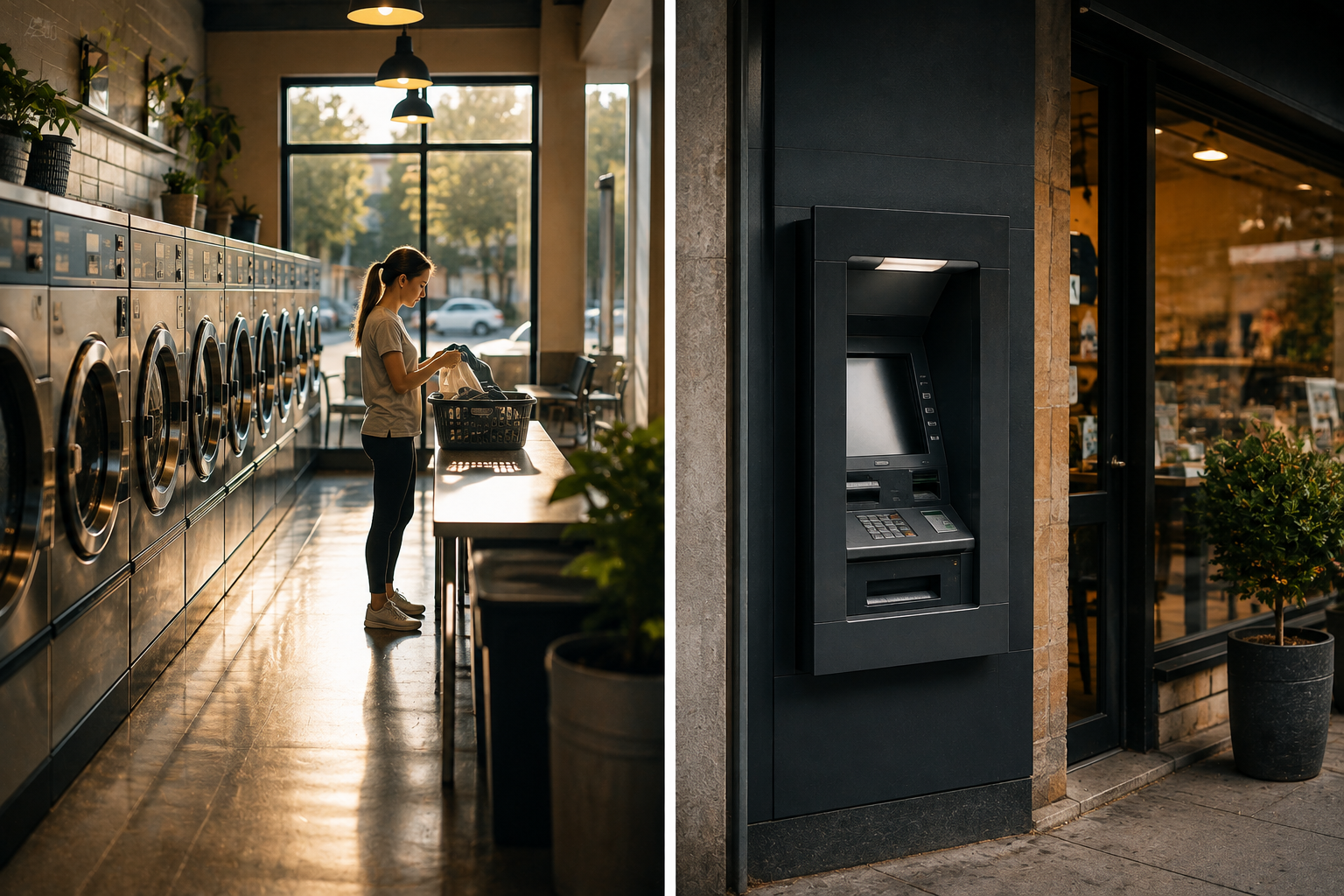
Boring business models that make money consistently are usually the ones nobody posts about on social media, because ATM routes, laundromats, and dumpster rental companies don’t photograph well, but they generate steady cash flow long after the trendy business idea of the month has faded.
If you scroll through business content in 2026, almost everything is about the exciting stuff.
AI startups.
Dropshipping empires.
Crypto trading.
Personal brands turning into eight-figure companies overnight.
None of that is inherently bad, but it creates a distorted picture of how most real wealth actually gets built, because a huge number of quietly profitable business owners are running things far less glamorous than any of that.
They own laundromats.
They run ATM routes.
They rent out dumpsters, storage units, and party equipment.
They clean windows, tow trucks, and haul trash.
Nobody’s making a documentary about them, but a lot of them are clearing six and seven figures a year, and understanding why these boring business models work is one of the most useful things you can study before you decide what to build next.
👉Get Access to : The AI Traffic Vault
This guide breaks down how to build and market the kind of content and digital products that fund a business like this from the side, using AI tools instead of a big team, which matters a lot once you see how capital-light some of these boring business models actually are.
We strongly recommend that you check out our guide on how to take advantage of AI in today’s passive income economy.
Table of Contents
Why Boring Business Models Outperform Trendy Ones
There’s a reason boring business models keep showing up in wealth-building conversations even though nobody wants to talk about them at parties.
They solve a problem that already exists, for a customer who already has money set aside to solve it.
Nobody has to be convinced that they need clean laundry, a working ATM nearby, or their trash picked up.
That’s very different from convincing someone they need a new app, a new supplement, or a new subscription service they’ve never thought about before.
Demand is already there, which removes one of the hardest parts of starting any business: proving people actually want what you’re selling.
The tradeoff is that boring business models rarely feel exciting, they don’t scale as fast as software, and they usually require you to actually show up and manage operations, at least in the early stages.
But for someone who wants steady, recession-resistant income instead of a lottery-ticket outcome, that tradeoff is often worth making.
Let’s go through six real, ongoing business models that fit this pattern, why they work, and what actually makes or breaks them.
👉Free download : Start a 1-Person Business With Claude AI — Free Quick-Start Guide
1. ATM Machine Routes
The ATM business is one of the oldest boring business models still working today, because as long as there are cash-only transactions happening somewhere, there’s demand for a machine nearby.
Nail salons, bars, laundromats, gas stations, and small event venues are common placements, because these are places where card fees eat into the owner’s margin and customers still occasionally need cash.
Industry data from ATM placement companies shows individual machines can generate anywhere from a few hundred to a few thousand dollars a month depending on foot traffic and transaction fees, and route owners typically scale by adding machines one location at a time rather than buying dozens at once.
The real work in this business isn’t installing the machine, it’s keeping it stocked with cash, keeping it functional, and maintaining a good enough relationship with the location owner that they don’t replace you with a competitor.
Machines that run dry or break down stop making money immediately, so the businesses that do well here treat maintenance as the core job, not an afterthought.
Location negotiation matters just as much, because a great machine in a dead location will always underperform a mediocre machine in a busy one.
This is a business that rewards patience over speed, since most successful operators build their route slowly, location by location, instead of trying to scale it all at once.
If you’re documenting a build like this for content, the same patience applies to growing an audience around it.
👉Get Access to : The Medium Mastery
2. Laundromats
Laundromats consistently show up on lists of the most resilient small businesses, and industry publications have reported laundromat success rates well above the average for small businesses overall, largely because the demand for clean clothes never really goes away.
The appeal is obvious on the surface: you install machines, customers pay to use them, and in theory the business runs itself.
In practice, laundromats still require real oversight, because machines break, utility costs fluctuate, and cleanliness directly affects whether customers come back or walk to the competitor down the street.
Location is everything in this business model, because laundromats depend on convenience, foot traffic, and proximity to apartment buildings or areas with a high renter population.
The businesses that struggle are usually the ones that treat the laundromat as fully passive from day one, without budgeting for maintenance, security, or the capital needed to eventually scale beyond one location.
The businesses that do well tend to treat it the way any other business is treated, with a real operating plan, even if the day-to-day workload is lighter than a typical storefront.
Scaling a laundromat portfolio also takes more capital than most new owners expect, which is why many operators start with a single location and reinvest profits before expanding.
It’s a solid entry point into boring business models, but not necessarily the fastest one to build significant wealth from.
3. Equipment and Tool Rental
Every construction crew, event planner, and small manufacturer occasionally needs a piece of equipment they don’t own, and that gap is exactly where the equipment rental business model lives.
Generators, pressure washers, scissor lifts, tow-behind trailers, and party equipment like tents and tables are common categories, because these are expensive to own outright but only needed occasionally.
Rental businesses also benefit from favorable depreciation treatment on equipment purchases, which is one reason this model appeals to people already running another business and looking for a tax-efficient way to deploy capital.
The catch is that equipment sitting unused is a liability, not an asset, so successful rental operators are disciplined about which categories of equipment actually get booked consistently in their area before they buy more inventory.
Logistics also matter more than people expect, since getting equipment to a customer on time, and getting it back in working condition, is really the core service being sold, not the equipment itself.
Starting small with one or two high-demand categories, tracking utilization closely, and expanding only once a category proves itself is the approach that tends to work best.
This is a business model with real staying power heading into 2026, particularly as more manufacturing and construction activity has been returning to domestic markets, increasing baseline demand for rental equipment.
👉Get Access to : The Flipboard Traffic Workflow Kit
4. Local Home and Trade Services
Home service businesses like HVAC, plumbing, window cleaning, and pressure washing are some of the most capital-light boring business models available, because the barrier to entry is skill and reputation, not large upfront investment.
These businesses can be started with a truck, a set of tools, and the right trade knowledge, which is why trade school routes have become an increasingly common path into ownership rather than employment.
The advantage of trade-based service businesses is that demand is local and recurring, since HVAC systems, plumbing, and home exteriors all require ongoing maintenance regardless of the broader economy.
The disadvantage is that these businesses are easy to start, which means they’re also easy for competitors to start, so standing out requires consistent quality and smart local marketing rather than just showing up.
Many local service businesses in 2026 are still relying on outdated marketing channels, while a growing share of their potential customers are searching and comparing providers online first, which creates an opening for operators willing to invest in a real digital presence.
The businesses that grow fastest in this category usually start hyperlocal, build a strong reputation in one small area, and only expand into new territory once their systems and staffing can support it.
That slow, local-first approach mirrors how a lot of durable boring business models get built, whether they’re service-based or property-based.
👉Free download : The Claude AI Digital Product Starter Pack — 10 Done-For-You Prompts for Beginners
5. Specialty Towing and Recovery Services
Towing is one of the least glamorous business models on this list, but it’s also one of the most consistently profitable in the right market, particularly specialty towing for commercial trucks and heavy equipment.
Standard roadside towing has plenty of competition, but heavy-duty towing for tractor-trailers and industrial equipment requires expensive specialized equipment, which naturally limits how many competitors exist in a given region.
Operators who invest in the right equipment for heavy recovery work can often set premium pricing simply because there are so few providers in their area capable of handling large jobs quickly.
The barrier to entry works both ways though, since the equipment is expensive to buy and maintain, and drivers need the right certifications to legally and safely operate it.
Most successful towing businesses start with a single truck covering a defined service area, then reinvest profits into additional trucks and drivers as demand justifies it.
This is a business model that rewards operators who are comfortable with equipment-heavy operations and who treat maintenance and driver qualifications as non-negotiable, since a breakdown or an accident can be far more costly than in most other service businesses.
It’s not an easy business to run, but it’s a good example of how a narrow, unglamorous niche can produce outsized margins when competition is naturally limited.
6. Waste Management and Trash Collection
Waste management is one of the largest boring business models in the world, and the industry has produced multiple billion-dollar companies built almost entirely on a service every household and business already needs.
Green for Life, better known as GFL Environmental, is a well-known example of how far this model can scale, having grown from a collection of small Ontario waste companies into one of North America’s largest publicly traded waste management companies through a long series of acquisitions.
That kind of scale isn’t realistic for most new operators, but the underlying lesson is useful at any size: trash and recycling pickup is a recurring, non-optional expense for almost every household and business, which makes it one of the most stable demand bases in any local economy.
The opportunity for smaller operators usually isn’t beating national waste companies head-on, it’s identifying gaps in local service, such as underserved pickup schedules, specialty waste categories, or areas where larger companies have deprioritized smaller accounts.
Entering this business model requires real capital for trucks and containers, along with navigating local permitting and environmental regulations, so it’s not a low-barrier option like window cleaning or ATM routes.
For operators willing to start small, study their local market closely, and find the specific gap larger competitors are ignoring, waste management remains one of the most durable boring business models available heading into 2026.
👉Get Access to : The AI Blog Monetization Quickstart Guide
The Pattern Behind Every Boring Business Model That Works
Looking across all six of these boring business models, a few patterns show up again and again.
Every single one of them solves a problem that already exists, rather than trying to create demand from nothing.
Every one of them rewards operators who start small, reinvest profits, and expand deliberately instead of trying to scale everything at once.
And every one of them depends far more on consistent operations, maintenance, and reputation than on any single clever idea.
That’s really the core insight behind why boring business models keep quietly outperforming trendier ones: they’re built on fundamentals that don’t go out of style, even when the industry around them changes.
None of that means these businesses are easy, because equipment breaks, competitors show up, and local regulations shift.
But it does mean the businesses on this list have a track record that’s much easier to evaluate before you commit real time and money to them, compared to something built entirely around a trend.
If you’re weighing a boring, hands-on business model against building something digital first while you save capital, that’s exactly the gap the next resource is built to close.
👉 Get Access to the full Package: Start a 1-Person Business With Claude AI
Final Thoughts on Boring Business Models
Boring business models will probably never trend the way a flashy startup story does, but that’s largely the point, since the businesses on this list keep making money quietly, year after year, without needing constant reinvention to survive.
If you’re thinking about which direction to take next, the honest answer is that the right boring business model depends on your starting capital, your tolerance for hands-on operations, and how much local market research you’re willing to do before committing.
Start narrow, study one specific gap in your local market, and resist the urge to scale before your systems and cash flow can actually support it.
That single habit is probably the biggest difference between the boring businesses that quietly hit seven figures and the ones that stall out in year one.
👉Get Access to : The AI Traffic Vault
👉Free download : Start a 1-Person Business With Claude AI — Free Quick-Start Guide
We strongly recommend that you check out our guide on how to take advantage of AI in today’s passive income economy.