
Why Creators Stay Broke While Content Businesses Keep Growing
A content business stays broke when a creator chases followers across every platform instead of building one focused income system that owns its audience.
Most creators earn very little because they treat content as a numbers game instead of a business.
They post everywhere, sell nothing, and wonder why the views never turn into income.
The creators who actually grow a sustainable content business do the opposite.
They pick one platform, master it, and build a product ladder underneath it.
👉Free download: Start a 1-Person Business With Claude AI — Free Quick-Start Guide
This article breaks down exactly why that gap exists, and how you can close it.
We strongly recommend that you check out our guide on how to take advantage of AI in today’s passive income economy.
Table of Contents
The One Platform Mistake That Keeps Creators Broke
Most new creators start the same way.
They post twenty five average pieces a week across six different platforms.
None of it lands, and none of it builds a content business that pays.
Spreading yourself thin does not make you discoverable.
It makes you forgettable, because no single platform ever sees your best work often enough to reward it.
The smarter path is to pick one platform first.
Win there, build proof, and only then expand into a second one.
Every platform trains a different version of you, so trying to master all of them at once slows down real content business growth.
Why Followers Don’t Equal Freedom
Each platform has its own personality, its own pace, and its own way of paying you.
Understanding those differences is the first real step toward building a content business that earns consistently.
X, formerly Twitter, rewards sharp opinions and quick, punchy takes, but content there has a short shelf life and tends to pay the least per post.
TikTok reaches cold audiences fast, which is great for visibility, but a large following there does not always translate into direct sales for a content business.
LinkedIn works well for professional or business focused niches, where short, value packed posts and simple lead magnets can attract high intent buyers.
Instagram rewards a mix of relatable behind the scenes content and carousels, and it tends to convert better for products, courses, and events than TikTok does.
YouTube generally pays the most per sponsorship and builds the deepest trust, because viewers spend real time with a creator instead of scrolling past in seconds.
A newsletter is often the most overlooked channel, yet it is usually the one with the highest intent, because the audience is fully owned instead of borrowed from an algorithm.
Knowing where each platform fits into your content business growth strategy is what separates creators who scale from creators who stay stuck.
The Real Money Model: Building a Content Business, Not Just a Following
Platform income like ad revenue and sponsorships is only ever a small slice of what a real content business can generate.
The bigger money almost always comes from what happens after someone finds you, not from the platform payout itself.
That is why a clear content business growth strategy needs more than good content.
It needs a system that turns a first time viewer into a long term customer.
Free Content Is Not a Business Plan
Free content builds trust, but trust alone does not pay bills.
A content business needs a bridge between free value and paid value, or the audience simply consumes and moves on.
This is where a simple digital guide or starter resource becomes useful, because it gives people an easy first step to take.
👉Free download: The Claude AI Digital Product Starter Pack — 10 Done-For-You Prompts for Beginners
A resource like this works well because it solves one specific problem without asking for a big commitment.
The Product Ladder That Actually Pays
A sustainable content business usually follows a simple ladder structure.
At the bottom sits free content, which earns attention and trust.
Just above that sits low cost digital products, usually priced under fifty dollars, like templates, prompt packs, or short guides.
The next rung holds mid tier offers, roughly fifty to five hundred dollars, such as courses, playbooks, or small communities.
Above that sits higher access offers, from five hundred to a few thousand dollars, like cohorts or memberships.
At the very top sits highly personalized, high ticket work, which only a small percentage of an audience will ever buy.
You do not need to build all five rungs on day one.
Most successful content businesses start with free content plus one paid step, then add more rungs as each one fills up.
👉Get Access to: The AI Blog Monetization Quickstart Guide
Guides like this are useful for creators who already have an audience but have not yet built out a monetization system.
Trust Beats Production Value Every Time
One of the most common mistakes creators make is assuming better production equals better results.
In reality, heavily produced content often performs worse than simple, native feeling content.
Every platform has its own visual language, its own pacing, and its own editing style, and content that respects that language tends to earn more trust.
Trust also comes from history, meaning content about things you have actually done rather than things you are guessing about.
You do not need decades of experience to speak with authority.
You only need to be a few steps ahead of the person you are talking to.
Showing your work in action, rather than just talking about it, is one of the fastest ways to build credibility for a content business.
A construction crew filming real job sites will always feel more trustworthy than a heavily staged studio setup, because there is nothing to fake.
Own One Category, Not Ten Topics
Creators who build a lasting content business usually get known for one specific thing.
Dave Ramsey is known for debt.
Mr Beast is known for scale and spectacle.
Kevin O’Leary is known for blunt business takes.
Picking one lane and repeating it consistently is uncomfortable at first, because it feels limiting.
But repetition is exactly what makes an audience remember you, and memory is what drives long term content business growth.
Inside that one lane, repeatable formats matter just as much as the topic itself.
A consistent format, a consistent visual style, or even a consistent opening line trains your audience to recognize your content instantly, even without sound.
Turning Attention Into a Content Business That Outlives the Algorithm
Ad revenue and platform payouts are unpredictable, and they can change overnight based on algorithm updates you cannot control.
That is why owned channels, like an email list, matter so much for long term content business stability.
Organic content, the kind you do not pay to promote, often converts better than paid advertising because it comes from an existing relationship rather than a cold impression.
Paid ads rent attention.
Organic content and an owned audience help you keep it.
This is exactly why building a documented content business growth strategy, rather than just posting randomly, makes such a big difference over time.
👉 Get Access to the full Package: Start a 1-Person Business With Claude AI
Resources like this are built specifically for solo creators trying to turn content into a full income system without hiring a team.
How to Start Building Your Content Business Today
If you want to stop spraying content everywhere and start building something that pays, follow this simple order.
First, choose one platform and commit to it for at least ninety days before judging results.
Second, study what already works in your niche instead of guessing at ideas from scratch.
Third, build one free resource and one low cost paid product, so your audience has somewhere to go after the free content.
Fourth, track a few simple numbers, like watch time, click through rate, or email open rate, so you know what is actually working.
Fifth, review your results regularly and repeat what performs, because consistency compounds faster than constant reinvention.
A real content business is never built overnight, and it is rarely built by chasing every platform at once.
It is built by choosing one lane, showing up consistently, and slowly turning free attention into paid outcomes.
👉Free download: Start a 1-Person Business With Claude AI — Free Quick-Start Guide
If you are ready to put a real content business growth strategy in place instead of guessing, the resources linked throughout this article are a solid starting point.
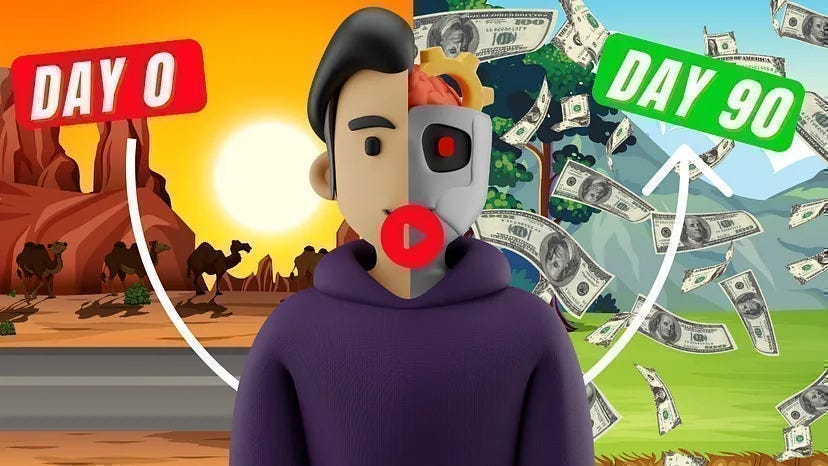
We strongly recommend that you check out our guide on how to take advantage of AI in today’s passive income economy.