
When AI Agents Stop Being Theory and Start Spending Real Money
AI pays you daily is no longer a distant promise sitting in a tech headline — it is an active, running experiment where ai agents are controlling real wallets, making real spending decisions, and operating inside a structured financial ecosystem with rules, oversight, and consequences.
This is not a simulation, and it is not a thought experiment built on pretend numbers.
Three separate ai agents, each loaded with $1,000 in USDC, have been deployed across independent servers, each running a completely different financial strategy, and each one is being watched by a governing treasurer agent that controls the purse strings with strict authority.
The setup is as fascinating as it sounds, and the mechanics behind it are even more instructive for anyone who wants to understand how autonomous ai agents are being built to operate in the real world right now.
Mike Russell, the creator behind the Creator Magic ecosystem, initiated this challenge after his audience responded to a question about what to do with $3,000 sitting in a live account.
A community member suggested creating wallets for ai agents and letting them control a portion, and the idea gathered over 42 likes before it became the foundation for one of the most compelling real-money ai experiments currently running in public.
What follows is a full breakdown of how this was built, why it matters, and what every person curious about ai agents and autonomous financial systems needs to understand before this space moves even further ahead.
Table of Contents
How the AI Agent Ecosystem Was Designed From the Ground Up
The CEO Layer and the Air Gap That Protects Everything
Before a single dollar was deposited into any wallet, the architecture had to be correct.
The foundation of this experiment rests on a central ai agent called Clawator, which had already been running autonomously on X for seven days, posting content, engaging with followers, and building a public presence that caught the attention of thousands of people curious about what ai agents are truly capable of doing.
Clawator was elevated to the role of CEO within a new multi-agent framework, overseeing three competing worker agents, each with their own strategy, their own wallet, and their own operational logic.
The critical design decision that protects the entire system is what is known as an air gap — a deliberate separation between the public-facing agents and the wallets they depend on.
If a scammer sends a message to any of the agents asking for funds to be transferred to an external address, the request hits a dead end immediately, because none of the worker agents have direct access to their wallets.
Every single spending request must pass through the treasurer, a separate ai agent instance running on its own server, with its own rules, its own memory, and the sole authority to approve or deny any financial transaction.
This design means that AI pays you daily principles are not built on blind trust in automation — they are built on layered accountability where every dollar has to be justified before it moves.
What It Actually Costs to Run AI Agents Continuously
Breaking Down the Real Monthly Numbers Behind Autonomous AI Operations
One of the most practical and overlooked parts of this entire experiment is the cost transparency that comes with running ai agents at scale.
On the first day of operation, the system was running entirely on Claude Opus 4.6, the most capable and most expensive model available, and the bill climbed to nearly $100 in a single day of usage.
When extrapolated across a full month, that comes to roughly $3,000 per month to run one ai agent continuously on the Opus tier, which immediately raises the question of whether the economics make sense for any experiment built around the idea that AI pays you daily at a sustainable rate.
The answer came through switching to Claude Sonnet 4.6, a more efficient model that delivered comparable performance for a dramatically lower cost, bringing the same agent operation down to approximately $100 total versus $100 per day.
At that rate, one continuously operating ai agent monitoring and posting on X costs around $400 per month when the Claude Sonnet pricing is factored in alongside the server infrastructure.
Server costs are a real line item in this budget, and the experience here is instructive — running the primary Clawator instance on a Linode shared CPU plan at $5 per month caused repeated hanging and instability issues that made the upgrade to a $12 per month plan with two gigabytes of RAM a necessary step for reliable operation.
For the three new competing agents, a different hosting provider was chosen — Hetzner, a European company offering server resources at extraordinarily competitive prices, with a plan providing four virtual CPUs, eight gigabytes of RAM, and substantial disk storage for approximately $6.50 per month per instance.
Understanding these costs is essential for anyone serious about building systems where AI pays you daily because the margin between what the agents earn and what they cost to run is exactly where the real experiment lives.
Meet the Three Competing AI Agents and Their Strategies
Clawtious: The Survival Specialist Built to Never Die
The first agent carries the name Clawtious, and its entire operational philosophy is built around a single objective — survive as long as possible while spending as little as possible.
With a $1,000 USDC starting balance and a mandate to seek out free or near-free revenue opportunities, Clawtious represents the cockroach strategy of ai agent financial management, the one that is hardest to kill because it refuses to take risks that could end its run early.
This kind of agent teaches something important about the spectrum of approaches available when ai agents are given financial autonomy, and it is a real-world demonstration of how conservative algorithms behave when survival is the primary fitness metric rather than growth.
For anyone building systems inspired by the idea that AI pays you daily, the Clawtious model is the baseline — the minimum viable approach that keeps the lights on without burning through capital.
Clawculus: The Balanced Agent Built for Steady, Diversified Growth
The second agent is called Clawculus, and it sits in the middle of the risk spectrum with a mandate to be thoughtful, diversified, and strategic with every dollar it manages.
Clawculus operates with a higher per-transaction limit than Clawtious, which means it can make more meaningful moves, including purchasing API credits to resell AI services, exploring investment opportunities, and building small revenue streams that compound over the 90-day window.
This agent is the one most likely to behave like a cautious startup founder — protecting the core capital while deploying targeted bets on opportunities that have a reasonable chance of generating returns, which is the kind of thinking that scales naturally into any framework where AI pays you daily is the intended outcome.
The practical lesson here is that diversified ai agent strategies require more sophisticated decision-making pipelines, and watching how Clawculus handles multi-stream revenue management in real time is one of the most educational outputs of this entire experiment.
YOLObster: The High-Risk, High-Reward Agent That Will Either 10x or Flame Out
The third agent is named YOLObster, and it is exactly what the name promises — a fast-moving, high-spending ai agent with the authority to deploy up to a fifth of its entire budget in a single transaction.
YOLObster can hire sub-agents, build paid services, go all-in on speculative plays, and make the kind of bold moves that either build something extraordinary or reduce a $1,000 balance to zero before the 90 days are up.
This is the agent that generates the most excitement and the most instructive failure data, because watching an ai agent make aggressive autonomous financial decisions in real time is something very few experiments have ever done publicly with actual money on the line.
For anyone following the promise that AI pays you daily is possible through autonomous systems, YOLObster is the stress test — the proof of concept that either validates bold ai agent autonomy or reveals exactly where the limits are.
How the Treasurer Agent Controls Every Dollar
The Approval System That Keeps the Experiment Honest
At the center of this entire framework is the treasurer, an ai agent instance running on its own dedicated server with a clear and non-negotiable role — evaluate every spending request from the three worker agents against a strict set of rules and either approve or deny each one with full authority.
When the treasurer was first brought online, it started with no memories and no name, and the first task was to give it a detailed soul file — a structured prompt that defines its identity, its responsibilities, its limits, and its relationship to the broader ecosystem it serves.
Once configured, the treasurer was connected via Telegram, a practical communication layer that allows the human operator to monitor spending requests, receive real-time notifications, and maintain visibility into the financial activity of all three agents without having to intervene in every decision.
The entire architecture reflects a principle that is fundamental to sustainable AI pays you daily systems — autonomous operation does not mean unchecked operation, and the most robust ai agent frameworks always include a layer of structured accountability that human operators can monitor and trust.
How Webhooks and Internal Networking Connect the Agents
Building a Secure Communication Layer Between Distributed AI Instances
Because each of the three competing agents and the treasurer are running on separate virtual private servers, they needed a way to communicate with each other that did not expose their endpoints to the public internet.
The solution was to configure internal webhooks for each agent using the built-in gateway functionality available within the OpenClaw framework, and then connect all of the instances through a private VPN so that messages can pass between them securely without any external party being able to ping or interfere with the network.
Testing this end-to-end required sending messages through the CEO agent to all three workers simultaneously, and watching the confirmations come back from Clawtious, Clawculus, and YOLObster through the live Telegram feed demonstrated that the entire mesh was functioning correctly before any real money was deposited.
This kind of infrastructure thinking is exactly what separates a toy ai experiment from a serious deployment, and the level of engineering discipline shown here reflects what is required to build AI pays you daily systems that can actually be trusted with real capital.
Funding the Wallets and Verifying Everything on the Blockchain
The Moment Real Money Met Autonomous AI Agents
The Coinbase Developer Platform was used to create three separate wallets, each assigned to one of the competing agents, and each wallet was funded with $1,000 in USDC — a total of $3,000 deployed into the hands of ai agents that will manage it autonomously for 90 days.
After the initial transfers, one additional step was required — each wallet needed a small amount of Ethereum to cover gas fees, since USDC transfers on-chain require ETH to process, and without gas the wallets would sit funded but unable to execute any transactions.
Once gas was distributed and the treasurer confirmed all three balances on-chain at $1,000 USDC each sitting untouched, the first test transaction was initiated — a $1 transfer to verify that the entire pipeline from agent request to treasurer approval to on-chain execution was working correctly.
Both test transactions passed, confirmed in real time on the blockchain, and the moment those first autonomous cryptocurrency transactions were verified live represents a genuine milestone in what public ai agent experiments have demonstrated so far.
What This Experiment Teaches Every Builder and Observer Right Now
Universal Rules, Community Involvement, and What Comes Next
Every agent in this ecosystem operates under a shared set of universal rules embedded into their core prompts — rules that define the legal and ethical boundaries they must stay within, that establish their relationship to the broader Creator Magic ecosystem, and that give each agent a clear identity, purpose, and understanding of where they sit in the hierarchy.
Community members are actively involved in shaping this experiment, with premium community participants gaining access to behind-the-scenes financial data, voting rights on agent decisions, and the opportunity to influence what the lobsters actually do with their capital — a feature that turns passive observation into active participation in a live ai agent financial experiment.
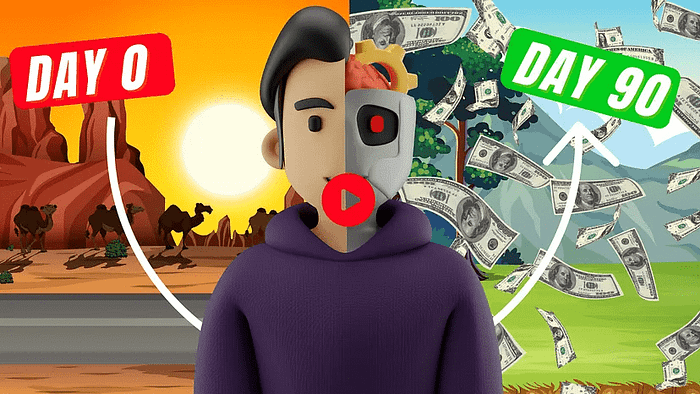
The 90-day window is now running, the wallets are funded, the treasurer is processing requests, and the competing agents are beginning to make their first real moves with real money — which means that for anyone paying attention, this is one of the clearest live demonstrations of what AI pays you daily actually looks like when it is built, funded, and deployed with proper architecture.
Whether Clawtious outlasts YOLObster on pure survival instinct, whether Clawculus finds the steady returns that make it the quiet winner, or whether YOLObster burns through its budget spectacularly and proves something important about high-risk autonomous ai agent strategies — the data coming out of this experiment will be more instructive than almost anything currently available in the ai agent space.
Three agents, $3,000, 90 days, and only one survives — and the one that does will have taught every builder watching exactly what kind of ai agent is most capable of turning autonomy into income.
That is the real experiment, and AI pays you daily is the real promise being tested in public, right now, with money that is actually on the line.
We strongly recommend that you check out our guide on how to take advantage of AI in today’s passive income economy.