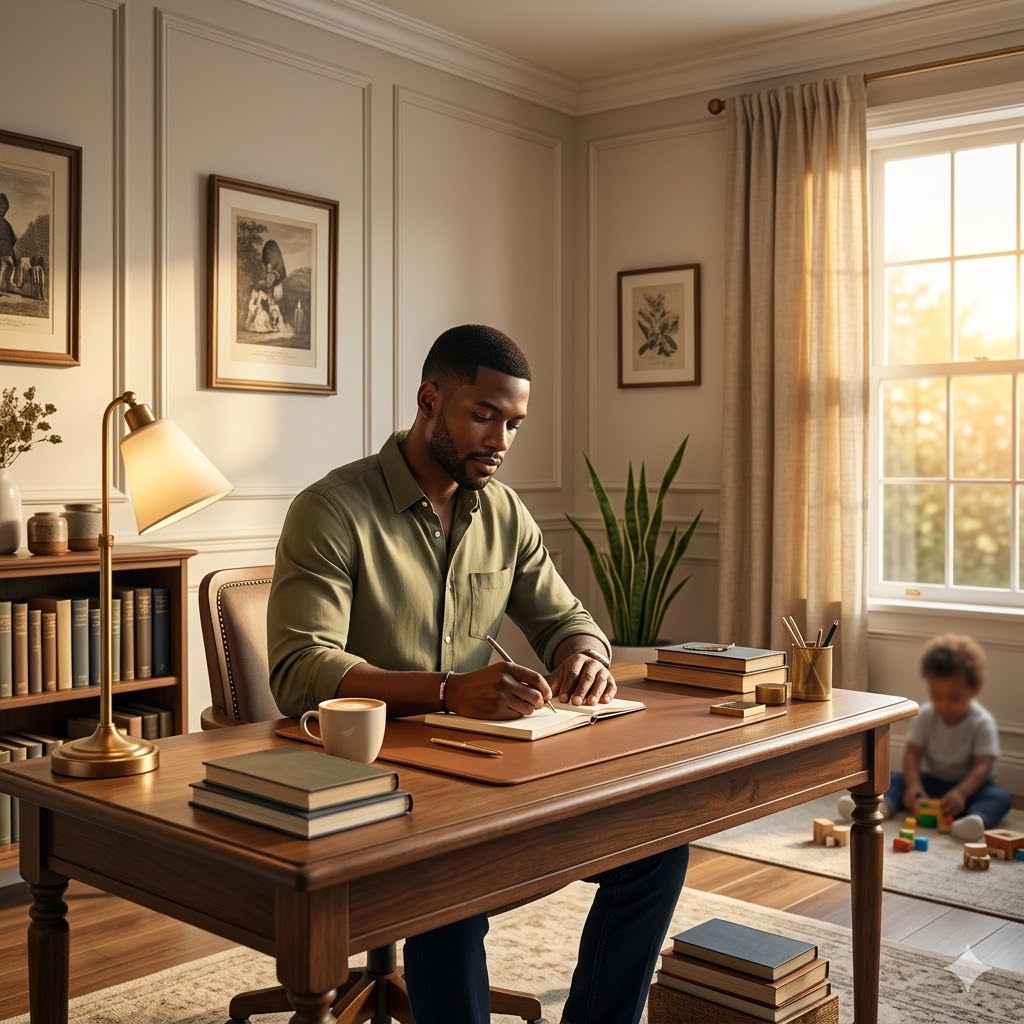
How to Get the Old Money Office Look for Less Than $400 in 2026
The Old Money Aesthetic Is Not Just for the Wealthy
The old money home office aesthetic is one of the most powerful interior design styles you can bring into your home without breaking the bank in 2026.
It carries a look that speaks of quiet wealth, deep history, and serious purpose — the kind of office that makes people stop and stare the moment they walk through the door.
Dark wood tones, leather accents, brass fixtures, vintage books stacked neatly on full shelves, and rich oil paintings hanging on the wall — these are the signatures of a space that feels earned and lived in over generations.
The good news is that you do not need a trust fund or a designer on retainer to pull this off.
What you need is a clear plan, a willingness to take the project seriously, and the right tools and resources working in your favor.
You can even use AmpereAI at the very start of this journey to generate room layout ideas, style mood boards, and build out your shopping lists with AI precision before you spend a single dollar.
This guide is going to walk you through every step of creating an old money home office that looks genuinely expensive — from the wall color and built-in cabinetry to the brass lamps and vintage decor that seal the deal.
By the time you finish reading, you will have everything you need to transform even the most outdated, plain-looking room into a space that looks like it belongs in a private library on the English countryside.
We strongly recommend that you check out our guide on how to take advantage of AI in today’s passive income economy.
Table of Contents
What Exactly Is the Old Money Aesthetic?
Before you start buying anything, you need to understand what the old money aesthetic is actually built on.
It is not about flashy logos, brand-new furniture, or anything that screams “I just bought this.”
The old money look is rooted in restraint, durability, and the kind of quiet luxury that has been accumulated slowly over time.
Think about walnut wood built-ins that run floor to ceiling, filling an entire wall with depth and warmth.
Think about dark, moody paint colors like deep hunter green, warm charcoal, or rich navy that make a room feel serious and grounded.
Think about leather — a vintage leather chair tucked into a corner, a leather desk pad anchoring the work surface, or even a leather-bound book sitting on the shelf among rows of old encyclopedias.
Brass is absolutely central to the old money home office look, whether that shows up as a pair of solid brass duck figurines on the shelf, a brass desk lamp casting warm light across the room, or brass drawer pulls running down the length of a custom cabinet.
AmpereAI can help you visualize how all of these elements come together before you commit to a single purchase, which saves you both time and money in the planning stage.
The old money style also leans heavily into meaningful objects — a decanter of bourbon on a tray, a globe on the corner of the desk, framed portraits or landscape oil paintings in ornate frames hanging at eye level.
Every element in the room should feel like it has a story attached to it, as if it was inherited or collected slowly over a lifetime of good taste and refined habits.
Planning Your Old Money Home Office Transformation
Start With a Sketch and a Budget Ceiling
The first thing you need to do before any shopping or building begins is put your plan on paper.
Draw out your room dimensions and decide where your built-in cabinetry will go, where the desk will sit, and where accent pieces like lamps and chairs will land.
A full wall of floor-to-ceiling built-ins is the single most impactful design move you can make in an old money home office, and it is more achievable than most people think when you plan it properly.
If you have access to a CNC machine through a local makerspace — places like TechShop or similar community fabrication labs in your city — you can design and cut cabinet panels from plywood with a level of precision that rivals custom carpentry at a fraction of the cost.
CNC routing programs allow you to draw your cabinet parts as simple rectangles on screen and cut them out in hours rather than days, which makes building a full set of built-ins genuinely accessible to a motivated DIY homeowner.
For the built-in design itself, a standard layout for an old money office wall would include lower double cabinets on each end, a stack of drawers in the center for practical storage, and tall open bookcases sitting on top of the lower cabinets on both the left and right sides.
The center section above the drawers is where you make your biggest statement — a large piece of framed artwork, a mounted portrait, or a dramatic landscape painting that anchors the entire wall and draws the eye immediately.
ReplitIncome is worth mentioning here for the digital side of your home office setup, because building AI-powered income streams is one of the most relevant things a well-designed home office should be supporting in 2026.
Choosing the Right Wood and Paint Colors
For the old money aesthetic, dark brown is the correct choice for virtually every wooden element in the room.
You are looking for stained plywood or solid wood in a finish that leans toward walnut, espresso, or dark mahogany — tones that read immediately as serious, established, and expensive.
Cabinet boxes built from 3/4 inch plywood and then drum sanded smooth before staining will look remarkably close to solid hardwood furniture once they are finished and installed against the wall.
For paint, the walls should be a warm, creamy off-white or a deeply saturated dark tone depending on the size of your room and the amount of natural light coming in.
If your room has limited natural light, going with a warm ivory or aged linen on the walls will keep the space from feeling cave-like while still complementing the dark wood of the built-ins beautifully.
If you have decent natural light, a deep hunter green, charcoal, or dark navy on the walls will create the moody, wrapped atmosphere that defines the best old money home offices in 2026.
The ceiling should never be overlooked — painting it a creamy off-white rather than bright white ties the room together and gives the space a more intentional, curated feeling without looking theatrical or overdone.
AmpereAI can generate color palette recommendations based on your room dimensions and lighting conditions, which takes the guesswork out of one of the most stressful decisions in the entire project.
Building the Built-In Cabinetry on a Budget
Cabinet Construction Step by Step
Building your own cabinet boxes is the single biggest money-saving move in this entire project, and it is far less intimidating than it sounds once you break it down into steps.
Each cabinet box is essentially a rectangle built from four panels of 3/4 inch plywood — two sides, a top, and a bottom — joined together with a brad nailer and wood glue for a clean, professional finish.
The face frames, which are the strips of wood that cover the front edges of the cabinet box and give it a finished furniture look, are cut separately and then glued and nailed onto the front of each box after the boxes are assembled.
Doors are built from the same plywood or from MDF panels, and the old money look calls for simple, flat-panel doors rather than ornate raised panels — clean lines painted in a deep, dark tone read as far more sophisticated than overly decorative profiles.
For hinges, invest in quality Euro-style cabinet hinges with full three-dimensional adjustability — brands like Blum and Grass are widely available at Woodcraft or through online retailers and will make installing and aligning your doors dramatically easier than budget hinges.
Shelf pins should be installed in evenly spaced rows of holes drilled into the interior side panels of your bookcases so you can adjust shelf height freely as your book collection and decorative objects grow over time.
The countertop that runs across the top of your lower cabinets should be built from a single thick slab of plywood — ideally 3/4 inch stock drum sanded on both faces and then stained or painted to match the cabinet boxes below it.
ReplitIncome is a product worth considering for anyone using their new old money office to build a digital income operation, because a well-designed workspace directly supports productive output and higher earning potential.
Installation Day Tips That Save You Headaches
Install your lower cabinet boxes first, working from the largest units toward the smaller fill pieces, and use a laser level throughout the entire installation process to keep everything straight and plumb.
Pop off any existing baseboards or trim that would interfere with the cabinets sitting flush against the wall, and save those pieces to reinstall along the sides and base of the built-ins after everything is in place.
Once the lower cabinets and countertop are secure, bring in the upper bookcase units and set them on top of the countertop surface, anchoring them to the wall studs with long screws driven through the back panel.
Work carefully around any warped wall surfaces or uneven floors by shimming as needed — a cabinet that is slightly off-level will throw every door and shelf out of alignment and make the entire unit look unprofessional.
Gaps between cabinet units and the surrounding wall trim can be covered with small strips of matching wood molding, which fills the voids cleanly and makes the built-ins look like they were always part of the house’s original architecture.
After installation is complete, go back through the entire wall and do a final check on every door hinge — adjust the horizontal, vertical, and depth screws on each hinge until every door hangs perfectly parallel and closes with a satisfying, solid click.
AmpereAI can support your planning phase here by helping you calculate material quantities, cut lists, and installation sequences so you are not improvising decisions in the middle of a build day.
Decorating Your Old Money Office Without Overspending
Where to Find Authentic Old Money Decor
Once the built-ins are painted and the room is clean, the decorating phase begins — and this is where the old money aesthetic really comes to life with the right sourcing strategy.
Vintage books are absolutely non-negotiable in an old money home office, and the best place to find them at almost no cost is estate sales, library sales, and flea markets in your area.
Full sets of vintage encyclopedias, old travel books, leather-bound classics, and illustrated history volumes can often be purchased in bulk for as little as $10 to $25 per box, and stacked neatly on your built-in shelves they look extraordinary.
Brass accessories are the jewelry of the old money office — look for solid brass desk lamps, brass figurines, brass bookends, and brass drawer pulls at antique markets, vintage shops, and online resellers like Chairish, Ruby Lane, and EBID.
The brass lamp in particular is worth spending slightly more to get right — a well-made vintage or vintage-style brass floor lamp or desk lamp in warm light adds more atmosphere to an old money office than almost any other single purchase.
ReplitIncome connects you to a real platform for building AI-powered income from your home office setup, which is the kind of productive output that makes having a beautifully designed workspace feel truly worthwhile.
A vintage leather chair is the other anchor piece that signals old money immediately — local vintage markets, estate sales, and dealers like those found at curated antique markets in most mid-size cities will often have quality leather chairs in the $200 to $500 range that look genuinely spectacular.
The Art, the Bourbon, and the Final Touches
Every serious old money office needs a large piece of artwork on the wall, and it does not need to be expensive or original to read as impressive and intentional.
Framed landscape oil reproductions, antique maps, and vintage botanical prints found at flea markets or printed at high resolution through services like CanvasDiscount or Easy Canvas Prints can fill a large wall section with exactly the right visual weight.
A portrait — whether a painting of yourself or a generic vintage portrait picked up at an antique fair — hung prominently above the desk is one of the most distinctly old money moves you can make in a home office, and it never fails to prompt a reaction from anyone who sees the room.
A crystal decanter of bourbon or whiskey sitting on a small brass tray on the countertop or a side table is another classic old money detail that costs almost nothing to execute but communicates a very specific kind of quiet luxury.
A globe, a leather desk pad from brands like Saddleback Leather or Rustic Ridge, a silver or brass letter opener, and a set of matching leather-bound journals on the desk surface all work together to complete the look with understated elegance.
AmpereAI is built to help modern professionals think and work smarter, and in a space designed this intentionally, having an AI tool in your corner for content creation, planning, and income building makes the entire office setup genuinely powerful.
Budgeting the Full Old Money Office Makeover in 2026
Building a full old money home office transformation on a regular budget is absolutely achievable when you break the spending into clear categories.
The built-in cabinetry materials — plywood sheets, wood glue, brad nails, hinges, shelf pins, and paint — will typically run between $300 and $600 depending on the size of your wall and the number of cabinet units you are building.
The vintage decor and accessories — books, brass lamps, figurines, a vintage chair, artwork, and small accent pieces — can be sourced for as little as $150 to $400 if you shop estate sales, flea markets, and vintage dealers rather than retail stores.
Paint for the walls, ceiling, and cabinetry, along with primer and painter’s tape, adds another $80 to $150 to the total, depending on how many gallons you need for your specific room size.
That puts a full, well-executed old money home office transformation within reach for somewhere between $530 and $1,150 in total, which is a remarkable result for a space that will look like it cost several times that amount.
ReplitIncome is the kind of tool you want running from your new office from day one, because a space this intentionally designed deserves to be used for building something real and generating income that grows over time.
AmpereAI wraps it all together by giving you an AI-powered creative and business partner available right from the desk where your best work gets done.
Conclusion: Your Old Money Office Starts With One Decision
The old money home office aesthetic is not about wealth — it is about intention, taste, and the willingness to build something that lasts.
Every choice in the room, from the dark stain on the cabinet boxes to the brass lamp glowing in the corner and the vintage leather chair by the window, communicates that you take your work and your space seriously.
The project is fully achievable on a regular budget when you build the cabinetry yourself, shop vintage markets for decor, and plan every step carefully before the first piece of plywood is cut.
Use AmpereAI to sharpen your planning, generate ideas, and power up the AI side of your home office workflow from the very first day you sit down at that new desk.
Use ReplitIncome to start building AI-powered income streams from the same office you just designed to look like a million dollars on a very real budget.
The room you have been imagining — dark wood, brass light, rows of books, art on the wall, leather in the corner — is closer than you think, and now you have everything you need to build it.

We strongly recommend that you check out our guide on how to take advantage of AI in today’s passive income economy.