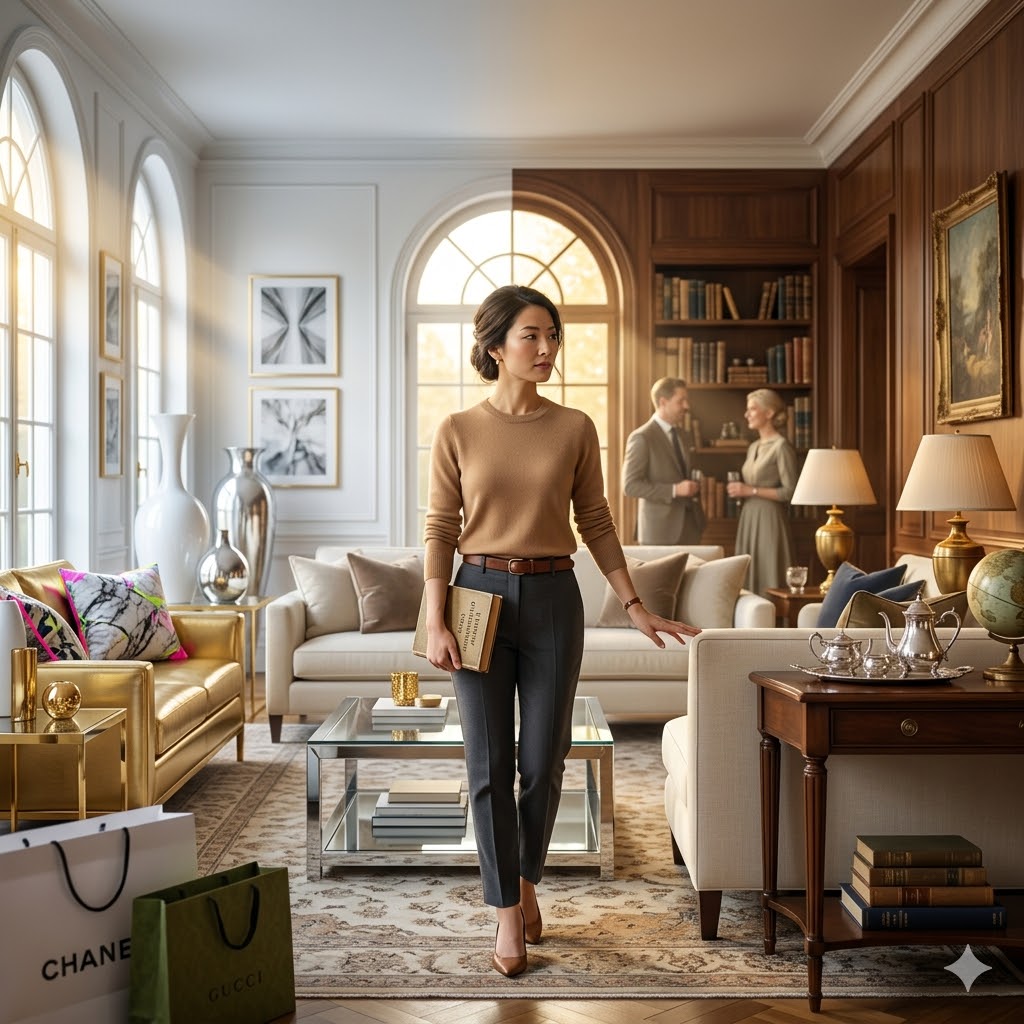
Your Home Decor Choices Are Telling a Story — Make Sure It’s the Right One
Your home decor style is the first thing people feel when they walk into a room — not see, feel.
Before they notice your paint color or your sofa, they pick up on an energy.
That energy either says “this space was put together with thought and intention” or it says “someone bought a bunch of stuff and hoped for the best.”
The difference between a room that looks polished and one that looks like it belongs in a WarriorPlus ad thumbnail comes down to a handful of very specific, very fixable mistakes.
These are not expensive problems to solve.
They don’t require a full renovation or a designer on speed dial.
They require awareness — and that’s exactly what this article is going to give you.
So let’s count them down, one by one, starting with the mistake that trips up more people than almost any other decorating decision they make.
We strongly recommend that you check out our guide on how to take advantage of AI in today’s passive income economy.
Table of Contents
Mistake #1 — Hanging Tiny Artwork in a Small Space
This one feels counterintuitive, which is probably why so many people get it wrong.
The logic seems to make sense on the surface — if you’ve got a small room, you should fill it with small things so it doesn’t feel overwhelmed.
But that’s not how the eye works, and it’s not how good home decor style comes together visually.
When you hang three or four little frames or tiny prints in a small room, your eye doesn’t know where to land.
It jumps from piece to piece, the wall starts to look cluttered and busy, and the room ends up feeling like a storage unit with throw pillows.
Picture a corner with four small 5×7 frames scattered across it — different heights, different frame finishes, different subjects — and ask yourself honestly if that reads as intentional.
It doesn’t.
Now picture that same corner with one large 36×48 canvas, simple subject, clean frame, hung at eye level.
Suddenly the room feels like it has a point of view.
The space feels bigger, calmer, and more considered — even if the room itself is exactly the same size as before.
If you want to find a large-format piece that doesn’t break your budget, platforms like Society6, Minted, and Desenio all carry oversized art prints at accessible price points.
You can even find original large-format work on Saatchi Art or Artfinder without paying gallery prices.
One big piece always beats six small ones — always.
Mistake #2 — Pushing All Your Furniture Against the Walls
Walk into almost any home decorated without professional guidance and you will see this mistake in full effect.
Every sofa pushed to the wall, every chair hugging the baseboard, everything living at the perimeter of the room like the center of the space is lava.
It feels like it should make the room bigger — all that open floor space in the middle — but what it actually does is destroy any sense of intimacy and conversation in the room.
Nobody wants to lean forward and yell across seven feet of empty rug just to ask someone to pass the remote.
The fix is a floor plan, drawn to scale, before you move a single piece of furniture.
You can do this old school with graph paper, or you can use a free tool like RoomSketcher or the IKEA room planner, both of which let you drag and drop scaled furniture into a digital layout of your actual space.
Once you start sketching it out, you’ll see almost immediately that pulling the sofa 18 to 24 inches off the wall and floating your seating around a central coffee table creates a real conversation grouping.
People can actually face each other, the room feels intentional, and the traffic flow around the outside of the furniture becomes natural and easy.
The open floor space isn’t what makes a room feel large — the thoughtful negative space between pieces is.
There’s a real difference between empty and airy, and a furniture plan is how you find that line.
Mistake #3 — Painting Before You Change Your Light Bulbs
This mistake has probably caused more unnecessary repaints than any other single error in home decor planning, and most people don’t even know it exists until they’re on their third coat of the same wall.
Here is what happens: you fall in love with a paint color on a chip in the store, under fluorescent lighting.
You bring it home, paint a test swatch, and it looks fine — but you’re looking at it under a warm yellow 2700K incandescent bulb, and your finished space is going to be lit by the daylight-balanced 5000K LEDs you planned to install afterward.
Those two light temperatures will make the same paint color look completely different.
The same greige that looked warm and cozy under your old bulbs can look gray, cold, and almost purple under a cooler daylight bulb.
That purple undertone people keep complaining about in their beige walls? That’s a lighting mismatch, not a bad paint color.
The fix is simple but non-negotiable: install the actual bulbs you plan to live with before you do your final paint selection testing.
Pull your top two or three paint choices — Benjamin Moore and Sherwin-Williams both sell peel-and-stick sample cards now, which makes this much easier — and look at them in the space under your actual planned lighting, at different times of day.
Morning light, afternoon light, and evening artificial light will all shift what you see.
Choose your color only when you’ve seen it behave correctly in all three, and you will never repaint a wall three times again.
Mistake #4 — Buying a Sofa Before You Know It Will Fit
This one is painful to watch, because sofas are almost never an impulse buy — they cost real money and people research them seriously — but the one measurement they forget to check is whether the piece will actually fit and function in their specific room.
Think about what happens when you walk into a showroom at a place like Restoration Hardware, West Elm, or even a local furniture store.
The sofas are displayed in enormous open floor spaces, sometimes 12,000 square feet of retail floor.
Everything looks proportional in there because the room is enormous.
You sit down on a 108-inch sofa, it feels perfect, you order it, and three weeks later the delivery crew is standing in your doorway with a piece of furniture that takes up every single inch of your living room wall and jams against your doorframe.
Before you ever set foot in a showroom, measure your room.
Know the exact width of the wall where the sofa will live, the depth of the seating area, and any doorways the piece needs to pass through during delivery.
Then decide on your sofa size before you start shopping — do you need a 72-inch, an 84-inch, or a 96-inch sofa? — and filter every showroom option through that number.
Apps like MagicPlan let you measure your room using your phone camera and create a scaled floor plan in minutes.
Knowing your number before you shop means you can fall in love freely, because every piece you’re considering already fits.
Mistake #5 — Ignoring the Power of a Single Focal Point
One of the fastest signs of amateur home decor decorating choices is a room with no clear focal point — or worse, a room where everything is competing to be the focal point at the same time.
When there’s a gallery wall on one side, a large television on another, a bold rug in the center, and a dramatic light fixture overhead, the eye doesn’t know where to look first.
It scans, it bounces, it gets exhausted, and the room feels chaotic even if everything in it is individually nice.
A room with strong home decor design principles always has one dominant visual anchor that everything else supports.
In a living room, that might be a fireplace with a clean stone surround and an asymmetrical mantel styled with a single large object — not twelve small ones.
It might be a single oversized canvas with a bold color pulled from the room’s palette.
It might be an architectural feature like a floor-to-ceiling window with a view, where the furniture is arranged to frame and celebrate that view rather than compete with it.
Once you identify or create a focal point, every other decision in the room becomes easier.
Does this piece support the focal point or distract from it? That question alone will cut your decorating mistakes in half.
Mistake #6 — Layering Patterns Instead of Textures
This is the mistake that separates rooms that look curated and expensive from rooms that look like every trend from 2019 through 2024 got thrown into a blender together.
Pattern mixing is a real skill, and even professional designers proceed carefully with it — because the wrong combination of patterns at the wrong scale creates visual noise that makes a space feel loud, restless, and cheap even when the individual pieces cost serious money.
What never fails, in any home decor style direction, is a texture story instead of a pattern story.
Picture a sofa in a chunky boucle fabric next to a smooth marble coffee table, layered over a flat-weave jute rug, with linen curtains catching light at the window.
No patterns, zero — just four completely different material textures creating depth, warmth, and visual interest.
That combination works in a minimalist space, a contemporary space, a traditional space, and everything in between.
If you want to use pattern, the rule that holds up consistently is this: one pattern per room, used in one place, supported entirely by solids and textures everywhere else.
A single patterned throw pillow on a solid sofa, one textured lumbar pillow as an accent, and solid-colored curtains is a complete, finished look that will photograph beautifully and age gracefully.
Brands like H&M Home, McGee & Co., and Threshold at Target all carry texture-forward pieces at a range of price points that make this approach very achievable without a large budget.
The Bottom Line on Getting Your Space to Look Intentional in 2026
Every single mistake on this list comes down to one underlying problem: decorating by instinct instead of by principle.
The instinct to put small art in a small space feels logical until you understand how the eye actually processes visual information.
The instinct to push furniture against the walls feels safe until you realize it’s killing the function of the room.
Understanding a few core principles of home decor design — scale, focal points, light, texture, and proportion — changes everything about how you approach decorating decisions.
You stop making choices based on what feels right in the moment and start making choices based on what actually works in a finished room.
None of this requires hiring anyone or spending more than you planned.
It requires slowing down, measuring before you buy, testing before you commit, and choosing one clear visual story to tell per room instead of trying to tell six at once.
Do that, and your space will stop looking like it was put together by someone who just got their first paycheck — and start looking like it was put together by someone who actually knows what they’re doing.

We strongly recommend that you check out our guide on how to take advantage of AI in today’s passive income economy.