
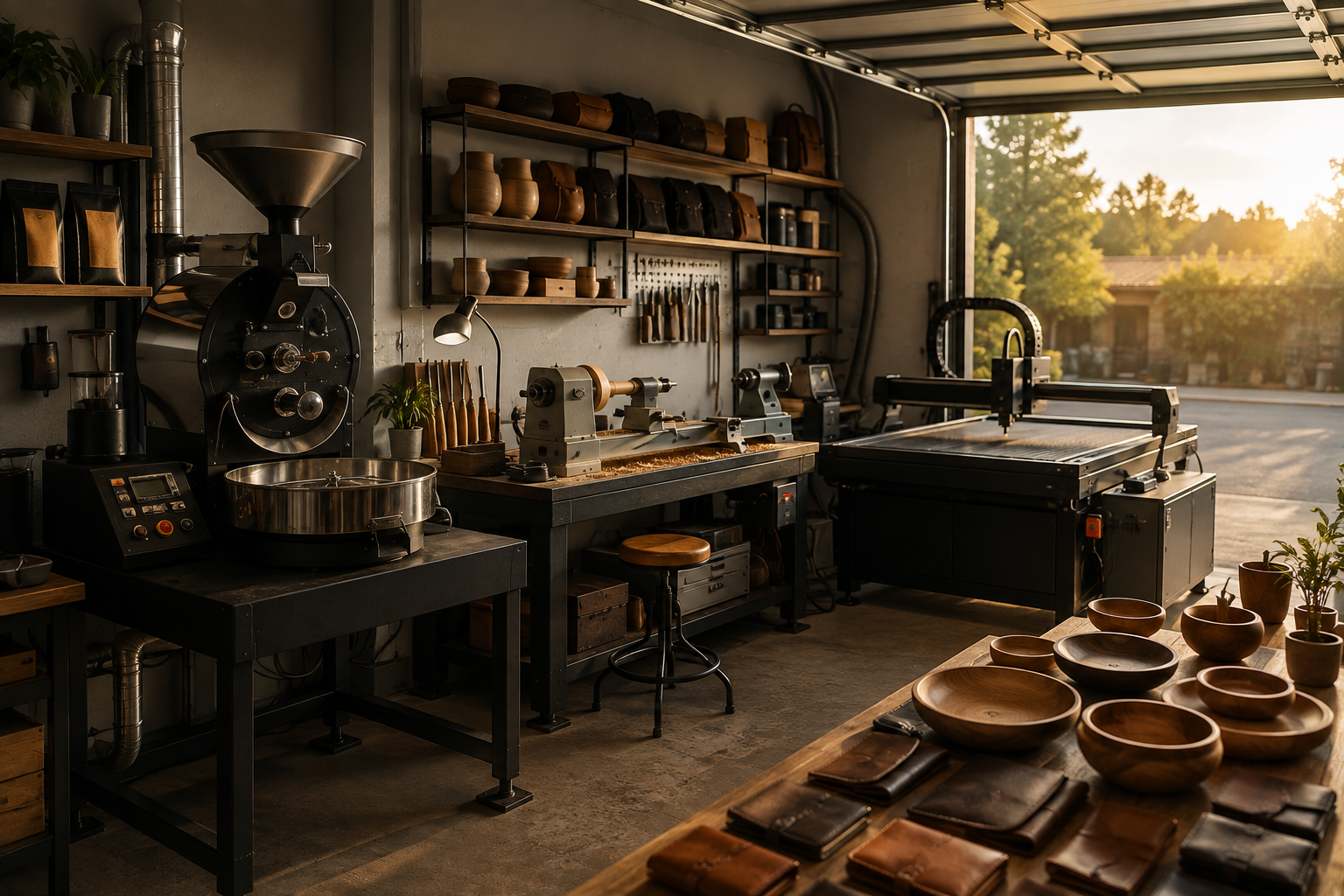
12 Garage Machines That Could Turn Into a $10K/Month Home Business In 2026
Profitable garage machines for home business are small pieces of equipment that let one person turn raw materials into sellable products without renting a shop or hiring staff.
You do not need a warehouse or a business degree to get started.
You need one machine, a plan, and the patience to learn it well.
This article breaks down twelve profitable garage machines for home business owners who want real income, real products, and a real shot at building something of their own in 2026.
Before we get into the list, here are two free resources worth grabbing first.
👉Free download : Start a 1-Person Business With Claude AI — Free Quick-Start Guide
👉Free download : The Claude AI Digital Product Starter Pack — 10 Done-For-You Prompts for Beginners
Both guides pair well with any of these garage machines because building the machine side is only half the business.
You still need a way to market what you make, price it, and sell it consistently.
Now let’s get into the twelve garage machines themselves.
We strongly recommend that you check out our guide on how to take advantage of AI in today’s passive income economy.
Table of Contents
1. Coffee Roaster Machine
Most people think the money in coffee is in brewing it, but the real profit sits one step earlier, in the roasting.
Small coffee roasting machines built for home businesses start around $1,300 for basic models.
Professional units with one to two kilo capacity run between $3,000 and $8,000, and most are about the size of a microwave, plugging into a standard outlet.
Green coffee beans cost roughly $4 to $7 per pound before roasting.
After roasting, those same beans sell for $12 to $20 per pound retail, since heat and time are what add the value.
A twelve-ounce bag that costs about $3 to produce can sell for $15 once it is roasted, bagged, and labeled.
Your edge over grocery store coffee is freshness, since many store shelves hold beans that are months old by the time they are bought.
This is one of the more approachable profitable garage machines for home business owners who enjoy a hands-on, sensory craft.
2. Laser Rust Removal Machine
Portable laser rust removal machines use a focused beam of light to strip rust, paint, and grime off metal without chemicals or sandblasting.
Entry-level handheld units start around $5,000 for 100 to 200 watt models, while more powerful 1,000 to 1,500 watt machines run $6,500 to $15,000.
These units are roughly the size of a large toolbox, which makes them easy to fit into a garage corner.
The customer base is everywhere once you look for it.
Classic car owners need parts restored, contractors have rusty tools, antique dealers want cast iron cookware brought back to life, and local businesses often have metal fixtures that need cleaning.
Even homeowners will pay to restore patio furniture instead of replacing it.
Pricing is flexible, and many operators charge $50 to $100 per hour for restoration work.
Among profitable garage machines for home business use, this one stands out for how visually satisfying the results are, which helps with word-of-mouth marketing.
3. Desktop CNC Plasma Cutter
If you have ever admired a custom steel sign or a perfectly cut metal bracket, you were probably looking at the result of a plasma cutter.
Entry-level systems, like the Crossfire table, start around $1,500 for a complete setup, while professional systems run $4,000 to $8,000 depending on cutting area and features.
These machines use a computer-controlled plasma torch to cut precise shapes out of sheet metal.
The list of things you can make is long: custom metal signs for businesses, decorative wall art, automotive brackets, fire pit rings, and steel organizers for garages and workshops.
Each project starts as a flat sheet and becomes something valuable through computer-guided cutting.
Your advantage over big manufacturers is speed and customization, since a custom part that would take weeks to order online can be cut in your garage in a matter of hours.
For anyone comparing profitable garage machines for home business projects with a design or artistic streak, this is one of the most flexible options.
4. Wood Lathe
A wood lathe lets you turn bowls, pens, candlesticks, and other rounded objects that sell well as handmade goods.
Quality midsize lathes suitable for business use cost $800 to $2,000, and a basic set of turning tools is enough to get started.
These machines are not huge, and most fit comfortably in a garage corner while running on standard household power.
Handmade wooden items have a loyal market.
Custom pens sell for $20 to $60 each and might cost around $5 in materials to make.
Decorative bowls bring $50 to $200 depending on the type of wood and the size of the piece.
Rolling pins, pepper mills, and other kitchen items stay in steady demand year-round.
This is one of the more meditative profitable garage machines for home business ideas, since the process itself is slow and repetitive in a satisfying way.
5. Screen Printing Setup
Custom apparel is everywhere, and a surprising amount of it starts in a small garage screen printing operation.
A basic setup costs $500 to $2,000 for a manual press, screens, inks, and basic equipment, and adding a small flash dryer rounds out the kit.
The learning curve is gentle, and most beginners can produce sellable shirts within days of starting.
The margins are strong too.
A custom t-shirt that costs around $5 to produce can sell for $15 to $25, and buyers include school groups, local businesses, and event organizers.
Because the market constantly renews itself with new events and new logos, demand rarely dries up completely.
Your advantage over large online printing companies is speed, since they often require minimum order sizes and weeks of lead time, while you can print a small batch overnight.
A local restaurant that needs twelve shirts by tomorrow will happily pay a premium for that kind of responsiveness.
👉Get Access to : The AI Blog Monetization Quickstart Guide
If you plan to document your screen printing journey online, this guide walks through turning that content into an extra income stream alongside the physical products.
6. Industrial Sewing Machine
Regular household sewing machines struggle with leather, canvas, denim, and upholstery, but industrial machines power right through them.
Heavy duty industrial sewing machines cost $800 to $3,000, and they open the door to leather goods and repair work that most hobbyists cannot touch.
Leather accessories stay in steady demand because buyers value handcrafted quality.
A leather belt that costs about $10 in materials can sell for $60 to $100, and custom motorcycle seats or car upholstery projects can bring in hundreds of dollars each.
Repair work also provides steady income, since boat covers, furniture upholstery, and heavy canvas items require an industrial machine that most households simply do not own.
That gap in the market is where you step in as the local go-to person.
Of all the profitable garage machines for home business use, this one rewards patience and precision the most.
7. Vacuum Forming Machine
Vacuum forming shapes heated plastic sheets over a mold to create custom parts and packaging.
Small tabletop vacuum formers cost $800 to $3,000 and can produce everything from product packaging to cosplay armor.
The process itself is simple to describe: heat a plastic sheet until it becomes pliable, pull it down tightly over a mold using vacuum suction, let it cool, then trim the edges.
What comes out is a precisely formed plastic part that matches the mold exactly.
Applications range from practical to creative, including custom packaging for small businesses, replacement parts for appliances, prototype housings for new inventions, and specialized organizers that sell well online.
Molds can be 3D printed, carved from foam, or machined from wood, which means you can make products that do not exist anywhere else yet.
Material costs stay minimal since plastic sheeting is inexpensive relative to the finished value of a custom part.
8. Food Dehydrator
Commercial-grade food dehydrators turn fresh ingredients into shelf-stable snacks that sell at a premium.
Professional dehydrators cost $200 to $1,000 and can process large batches of fruit, vegetables, and meat at once.
Healthy snacking continues to trend upward, and beef jerky alone commonly sells for around $20 per four-ounce bag when it is made in small batches with quality ingredients.
Your edge comes from quality control and unique flavors, since mass-produced jerky often leans on artificial ingredients while a small batch operation can use natural seasonings and premium cuts of meat.
The process is largely hands-off, since you load the dehydrator, set the timer, and let it work overnight while you sleep.
Farmers markets, gas stations, and online sales all provide separate revenue channels for the same finished product.
Sourcing locally from nearby farms and buying meat in bulk when it goes on sale helps protect your margins.
9. Plastic Shredder and Extruder
Plastic shredders and extruders, popularized by the open-source Precious Plastic project, cost $2,000 to $8,000 and let you turn waste plastic into new products.
The environmental story practically sells itself, since collected bottles, containers, and packaging get shredded, melted, and reformed into items like coasters, bowls, or filament for 3D printers.
Schools, maker spaces, and environmentally conscious customers tend to support local recycling efforts enthusiastically.
Products made from recycled plastic carry a story that buyers respond to, since a colorful cutting board made from old milk jugs feels different from an anonymous plastic item off a shelf.
Revenue can come from both directions, since some operators charge businesses a small fee to take their recyclable plastic and then sell the finished goods made from that same material.
That is effectively getting paid twice for the same batch of waste.
10. Key Cutting Machine
Key cutting is one of the simplest profitable garage machines for home business owners who want steady, predictable work.
Professional key duplicators cost $500 to $3,000 and can handle everything from house keys to automotive keys.
Everyone eventually needs a spare key, and many people prefer fast local service over a drive to a distant locksmith.
Each key copy takes only minutes and costs pennies in materials, yet sells for $3 to $8.
Property management companies are especially good customers, since landlords regularly need multiple copies made for new tenants, maintenance staff, and emergencies.
Real estate agents also need spare keys constantly for showings and lockboxes.
Stocking a wide range of key blanks and offering pickup or mobile service can help you compete even without a storefront location.
11. Small Pellet Mill
Small pellet mills compress sawdust, agricultural waste, and biomass into fuel pellets or animal feed.
Compact pellet mills cost $1,500 to $5,000 and turn waste material into a product people are willing to pay for.
Wood pellets for heating stoves sell for roughly $6 to $8 per 40-pound bag, and production costs stay low when sawdust is sourced from local lumber yards or sawmills that often want the waste hauled away for free.
Animal feed pellets serve a different but equally steady market, especially in rural areas with chickens, rabbits, and other livestock.
The process is mechanical but repeatable: feed material into the mill, monitor moisture and pressure, then bag the finished pellets.
Most small mills can produce several hundred pounds per hour once the settings are dialed in.
Distribution usually runs through farm stores, heating supply retailers, and direct local sales.
12. Rubber Stamp Making System
Rubber stamp making systems require very little space and cost $60 to $500, yet they can produce detailed custom stamps in minutes.
Every business, notary, and organization seems to need a stamp of some kind, whether it is an address stamp, a logo stamp, or an approval stamp.
Each stamp typically costs $2 to $5 to produce but sells for $15 to $30.
The process uses photosensitive material and UV light to create a detailed stamp plate from a customer’s design, which is then mounted onto a handle and delivered, often the same day it was ordered.
Marketing works well through office supply stores, business service centers, and direct online orders.
Because notaries need official seals and businesses regularly need address stamps, the demand stays steady and predictable throughout the year.
Profit margins tend to stay high because material costs are low while the perceived value of a finished stamp remains strong.
Picking the Right Machine for You
The goal is not to find the single perfect machine.
It is to find one of these profitable garage machines for home business plans that fits your budget, your skills, and the market right around you.
Some of these machines demand more technical patience, like the CNC plasma cutter or the vacuum former.
Others lean more on marketing and customer relationships, like key cutting or rubber stamp making.
Some require a bigger upfront investment, like the laser rust removal system, while others let you start small and reinvest your profits as you grow, like the wood lathe or the food dehydrator.
What all twelve share is the same basic formula: take a raw material that costs very little, apply skill and a machine to it, and sell the result for far more than it cost to make.
👉Get Access to the full Package: Start a 1-Person Business With Claude AI
If the machine side of the equation feels manageable but the marketing and sales side does not, this package is built to fill that exact gap for a one-person operation.
Getting Your First Sale
Once you have chosen your machine, the fastest path to your first sale is usually local.
Friends, neighbors, local Facebook groups, and nearby businesses are often more willing to take a chance on a new maker than strangers online.
From there, a simple website, a few clear photos, and consistent posting can start pulling in orders from further away.
👉Free download : Start a 1-Person Business With Claude AI — Free Quick-Start Guide
This free guide is a solid starting point if you want a simple, no-cost way to structure your first few weeks of selling.
👉Free download : The Claude AI Digital Product Starter Pack — 10 Done-For-You Prompts for Beginners
Pairing a physical product business with a small digital offer, like templates or guides related to your craft, can also add a second income stream without buying a second machine.
Final Thoughts
None of these twelve garage machines are secret or hard to find, and none of them require a factory-sized budget to get started.
What separates a $10,000-a-month operation from a machine gathering dust is consistency, decent marketing, and a willingness to keep improving after the first few sales.
Start with one machine, learn it well, and let the profit from your early sales fund the next tool or the next skill.
👉Get Access to : The AI Blog Monetization Quickstart Guide
Documenting your build and your sales journey online can turn into its own income stream over time, and this guide covers how to structure that content for monetization.
Every one of these profitable garage machines for home business plans started as someone’s first small purchase, so yours can too.

We strongly recommend that you check out our guide on how to take advantage of AI in today’s passive income economy.