
The Silent Revolution Paying Anonymous Creators Millions While Hollywood Stars Fight for Relevance
The Faces Nobody Sees Are the Faces Making the Most Money
Faceless YouTubers are quietly outearning some of the most recognizable names in entertainment, and the world has barely noticed.
Picture this.
A person sitting in a plain room somewhere in the world.
No ring light.
No camera pointed at their face.
No makeup, no scripted personality, no press junket to attend.
Just a laptop, a microphone, some stock footage, an AI voice tool, and an idea.
That person uploads a video to YouTube this week, and by the end of the month, they deposit more money into their bank account than many A-list celebrities earn per film appearance.
This is not a hypothetical.
This is the real story of how faceless video income has silently rewritten the rules of who gets rich on the internet — and it is happening right now at a scale that most people have not yet wrapped their heads around.
The creator economy in 2026 is not what people imagined it would look like.
Most people assumed fame would stay the same formula — show your face, build a fanbase, go viral on social media, land brand deals.
But a completely different economy has been growing beneath the surface, and it belongs entirely to the anonymous.
Table of Contents
The Billions Nobody Is Talking About
Faceless youTubers hit a combined $1.2 billion in ad revenue last year alone, and that number does not even include affiliate income, digital product sales, or sponsorship deals.
That is a staggering figure when you stop and think about what it represents.
It means that money — real, life-changing money — was made by people whose neighbors, family members, and coworkers have absolutely no idea they are earning it.
Faceless YouTube channels and TikTok accounts now represent 38% of all new creator monetization ventures, with top performers earning $80,000 or more every single month while maintaining complete anonymity.
Read that again.
Thirty-eight percent.
That means nearly four out of every ten people starting a new content monetization channel today are choosing to do it without putting their face on screen.
This represents a 217% increase from just 12% in 2022, signaling that anonymous content creation has moved from a niche experiment to a mainstream business model.
The shift is not a trend.
It is a structural change in how the internet values content.
Faceless youTubers have proven, repeatedly and with verifiable data, that your ideas and your execution matter far more than your physical appearance.
The algorithm does not care what you look like.
It cares how long people watch, how often they click, and whether they come back for more.
What a Faceless YouTube Channel Actually Looks Like
If you have never seen a faceless YouTube channel from the inside, let your mind picture a video where the screen shows crisp animated text sliding across a clean dark background.
A calm, professional AI-generated voice reads a compelling script about personal finance, true crime, ancient history, or technology.
The visuals shift between relevant stock footage, simple motion graphics, and bold headline text — all edited tightly to hold attention.
There is no presenter.
There is no talking head.
There is no personality to love or hate.
There is only the content.
And for millions of viewers, that is more than enough.
Faceless youTubers have discovered that when you remove the human presenter from the equation, the viewer stops evaluating the person and starts absorbing the information.
A 2025 audience sentiment study found that 72% of Gen Z viewers care more about content quality than whether they can see the creator’s face.
That generational shift is everything.
It means the audience has already moved.
The question is whether you are ready to move with them — and tools like faceless video income exist precisely to help regular people make that move without spending months figuring it out from scratch.
The Channels Earning More Than Celebrities — And You Cannot Google Their Real Names
Let us talk about specific numbers, because this is where the story gets genuinely jaw-dropping.
DaFuq Boom is one of the most successful faceless YouTube channels of 2026, earning between $500,000 and $1.3 million every single month.
That is not a typo.
One anonymous animated channel, built around surreal internet humor, is generating more money per month than most Hollywood actors make per major film role.
Daily Dose of Internet — known for curated clips of unique events — earns between $138,000 and $388,000 monthly from ad revenue alone, largely due to its high engagement rates and strategic niche targeting.
WatchMojo commands nearly 26 million subscribers and earns $120,000 to $334,000 monthly through ad revenue and licensing, powered by voice-driven narration and visual storytelling with no on-screen hosts.
The channel Fern, which makes 3D crime documentaries, pulls in around $80,000 or more per month — all faceless, all automated, all anonymous.
None of these creators are on magazine covers.
None of them do press tours.
None of them have agents negotiating deals in Beverly Hills.
They simply build systems, hit publish, and collect checks.
Faceless youTubers like these are not lucky outliers.
They are the proof of concept that every person sitting on a good idea but too afraid to get on camera desperately needs to see.
The faceless video income model that these creators run is now so refined and so replicable that tools and formulas exist to help beginners start from zero and reach monetization faster than anyone would have believed possible just three years ago.
The Niches That Are Quietly Minting Millionaires
Not every niche pays the same, and the smartest faceless youTubers know this better than anyone.
Faceless channels command premium CPM rates, earning anywhere from $15 to $40 per 1,000 views depending on niche selection.
Finance, business, technology, and personal development sit at the top of the earning pyramid.
A faceless youTuber running a finance channel can earn four to five times more per view than someone running a general entertainment channel, simply because the advertisers in that space pay more to reach that audience.
True crime, history, science, self-improvement, and AI tools are other high-performing categories where faceless youTubers dominate without any on-camera presence.
On TikTok, faceless accounts report 19% higher earnings per view in categories like educational content, which makes up 38% of top earners in the faceless space.
Think about what this means practically.
A faceless youTuber posting educational finance content to both YouTube and TikTok simultaneously is running two income streams from a single piece of content — without ever sitting in front of a camera.
This is the kind of faceless video income strategy that has turned everyday people into six-figure earners while their friends and family assume they are still struggling.
The niche is the engine.
The anonymity is the fuel.
And once you understand how to combine both, the income becomes almost unstoppable.
Why Faceless Video Beats Face-Camera Content in 2026
There is a common assumption that showing your face builds more trust and more connection with an audience.
That assumption is quickly becoming outdated.
Research shows that 86% of consumers now perceive faceless content as more credible and objective than personality-driven content, because it appears to remove ego and bias from the equation.
Viewers watching a faceless youTuber explain something feel like they are receiving pure, unfiltered information — not a performance designed to make someone look good on camera.
That psychological distinction is incredibly powerful, and smart creators have been leveraging it to build massive audiences faster than traditional face-camera channels.
Production costs for faceless content run approximately 58% lower than face-to-camera formats, while the typical faceless video requires about 4.5 hours from scripting to upload.
Lower cost, faster production, better perceived credibility, and higher CPM rates in the right niches.
The business case for becoming one of the next generation of faceless youTubers is overwhelming.
Add to that the ability to scale — running multiple channels simultaneously under different brand names — and you begin to understand why faceless video income has become the most talked-about online business model of 2026.
Traditional face-camera creators are locked to one identity, one channel, one audience.
Faceless youTubers can run three, four, even five channels, each in a different niche, each building its own income stream — and nobody knows it is all the same person behind the curtain.
The AI Tools Powering the Faceless Revolution
The rise of faceless youTubers is inseparable from the rise of AI content tools.
Five years ago, building a professional-quality faceless channel required outsourcing voiceovers to freelancers, spending hours sourcing and editing stock footage, and having decent video editing skills.
Today, the entire process has been compressed and automated.
AI voice generation has become the backbone of many top faceless YouTubers, with tools like ElevenLabs and Play.ht enabling creators to produce lifelike narrations in multiple languages and tones.
Video creation tools like CapCut, Pictory, InVideo, and Google Flow can turn a script into a fully produced video in under an hour.
AI writing tools help generate scripts, optimize for SEO, and structure content for maximum watch time — all without the creator needing to be a professional writer.
According to Adobe, 86% of global creators now use generative AI in their workflows, and for faceless youTubers, this number is likely even higher since AI is the core of the entire production pipeline.
The result is that a single person can now run a content operation that previously required a full production team.
This is the exact model that the faceless video income approach is built around — giving creators a ready-made formula so they are not left trying to figure out which tools to stack, which niches to target, or how to structure their channel for maximum monetization from day one.
Faceless youTubers who work smarter with AI are not just saving time.
They are compounding their output in ways that face-camera creators simply cannot match.
Real Numbers From Real Channels — The Income Breakdown
Let us stop being vague and get into the actual income architecture that faceless youTubers use to build their earnings.
The first income stream is YouTube AdSense.
Small channels might earn $50 to $500 per month after reaching monetization, while top performers like Fern at $80,000 per month and The Infographics Show at $100,000 to $300,000 per month earn six figures from ads alone.
The second income stream is affiliate marketing.
Faceless youTubers place affiliate links in their video descriptions and earn commissions every time a viewer clicks and buys — no selling required, no on-camera pitch, just a clean link and compelling content.
The third income stream is sponsorships.
Once your channel grows, brands will pay hundreds or even thousands for a simple shoutout in your video, and if your content is niche and loyal, memberships can be a great way to build recurring income — taking creators from $1,000 per month to $10,000 and beyond.
The fourth stream is digital products.
Faceless youTubers sell courses, ebooks, templates, and tools directly to their audience — often promoted through the same content machine that is already generating ad revenue.
Following the right steps — picking a high-RPM niche, posting consistently, and outsourcing smartly — creators can realistically target $5,000 to $10,000 per month within 12 to 18 months.
The faceless video income model plugs directly into all four of these income streams, giving creators a structured path to building multi-layered earnings from a single anonymous brand.
The Freedom That Comes With Anonymity
There is something else that does not get talked about enough when people discuss faceless youTubers, and it is the quality-of-life dimension of this income model.
Traditional online influencers are essentially public property.
Their appearance, their relationships, their mood, their personal choices — all of it becomes content, whether they want it to or not.
Every bad day is a potential PR disaster.
Every family moment is a potential invasion of privacy.
Every controversial opinion can cost them a sponsorship deal and send their income into freefall overnight.
Faceless youTubers have none of these vulnerabilities.
Their personal lives are completely sealed off from their business.
They can take a vacation, go through a difficult personal moment, change their mind about a topic, or simply have a normal quiet existence — and their channel keeps running, their income keeps arriving, and their audience never even notices.
This anonymity advantage means that faceless content creators can scale to multiple channels and personas simultaneously without personal brand limitations — a structural advantage no face-camera creator can replicate.
This is one of the biggest reasons faceless video income continues to attract so many new creators in 2026.
People are not just chasing money.
They are chasing a life where the income does not come with a tax on their privacy, their mental health, or their personal identity.
Faceless youTubers have figured out how to have both the income and the freedom.
How to Start Your Own Faceless YouTube Channel in 2026
If you have been reading this article and feeling a pull toward becoming one of the next wave of faceless youTubers, here is the honest, practical path forward.
Step one is choosing a niche that has both strong viewer demand and healthy advertiser spending.
Finance, AI tools, business, productivity, and personal development are all excellent starting points.
Think about what topics people search on YouTube with urgent, recurring questions — and position yourself as the channel that answers those questions better than anyone else.
Step two is building your content system.
This means settling on a script format, a visual style, and a production workflow that you can repeat consistently without burning out.
YouTube introduced stricter AI content policies in 2026, meaning videos flagged as inauthentic or mass-produced with no original insight can lose monetization — so your content must offer genuine value, not just AI filler.
Faceless youTubers who succeed are not lazy content factories.
They are genuine value providers who happen to use efficient tools to produce that value at scale.
Step three is monetizing from multiple angles from the very beginning.
Do not wait for AdSense alone.
Stack affiliate links, build a simple digital product, and pitch for sponsorships as soon as you hit 1,000 subscribers.
The faceless video income framework is specifically designed to help creators structure all of these monetization layers correctly from the start — rather than leaving money on the table by focusing on only one revenue stream at a time.
The Mindset That Separates Successful Faceless Creators From Everyone Else
The number one reason most people who try to become faceless youTubers quit before they succeed is mindset, not strategy.
They start strong.
They post a few videos.
They get discouraging view counts in the early weeks.
And then they give up — right before the algorithm begins to understand their channel and push their content to the right audiences.
The average faceless channel operates at a loss for six to twelve months before becoming profitable, and success requires treating it like a business investment, not a lottery ticket.
Faceless youTubers who stick through that early period almost always find that the income arrives suddenly and sharply, not gradually — because YouTube’s algorithm works in waves, not drips.
One good video can trigger a cascade that multiplies a channel’s views overnight.
One viral moment can push a channel from 1,000 subscribers to 100,000 in a matter of weeks.
The only thing standing between most aspiring creators and that outcome is consistency and patience — and having a proven system like faceless video income means you are not wasting those months guessing when you could be executing.
The most successful faceless youTubers are not the most talented.
They are the most consistent.
The Virtual Influencer Economy — The Next Level of Faceless Income
Beyond traditional faceless youTubers, there is an even more futuristic layer of this economy already generating enormous sums of money.
The virtual influencer market — featuring completely AI-generated personalities — was valued at $9.75 billion in 2024 and is projected to reach $154.83 billion by 2032, representing a compound annual growth rate of 41.29%.
Virtual influencers are entirely fictional digital characters — AI-generated faces, AI-generated voices, AI-generated personalities — earning real money from real brand deals with real companies.
Over 60% of brands have already worked with virtual influencers, and CMOs are expected to spend 30% of their influencer budgets on virtual influencers by 2026.
This means faceless youTubers who are already comfortable working behind the scenes have a direct pipeline into an emerging market worth hundreds of billions of dollars.
A faceless youTuber who masters AI-generated personas today is not just building a YouTube channel.
They are positioning themselves at the frontier of a brand-new creator economy that will define the next decade of internet income.
Faceless video income sits right at the intersection of all of this — the current moment, the emerging opportunity, and the practical tools that bridge them together.
Conclusion: The Era of the Invisible Creator Has Arrived
We started this article with a simple, almost unbelievable claim.
That faceless youTubers are quietly outearning A-list celebrities.
Faceless YouTube channels hit $1.2 billion in ad revenue last year alone — not from influencers, not from celebrities, but from people you have never heard of, showing nothing but stock footage, AI voiceovers, and screens with text on them.
That number is only going in one direction.
The audiences are already there.
The tools are already available.
The AI is already powerful enough to produce professional content at a fraction of the old cost.
In 2026, more tools, better AI, and smarter strategies make starting a faceless channel easier and faster than ever before, with creators hitting monetization within weeks — and advertisers spending more on YouTube, which means higher payouts across the board.
Faceless youTubers are not waiting for permission.
They are not waiting for the right moment.
They are not waiting to look confident on camera.
They are building right now, anonymously and systematically, and they are stacking income layers that will pay them for years to come.
If you have been waiting for a sign that this model is real, sustainable, and genuinely accessible — this article is that sign.
The invisible creators are winning.
The question is whether you are going to join them.
Start with faceless video income and give yourself the clearest, fastest path into the most exciting income revolution happening online today.
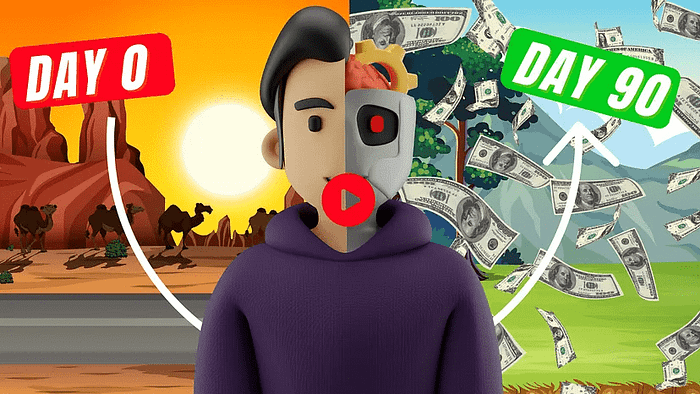
We strongly recommend that you check out our guide on how to take advantage of AI in today’s passive income economy.