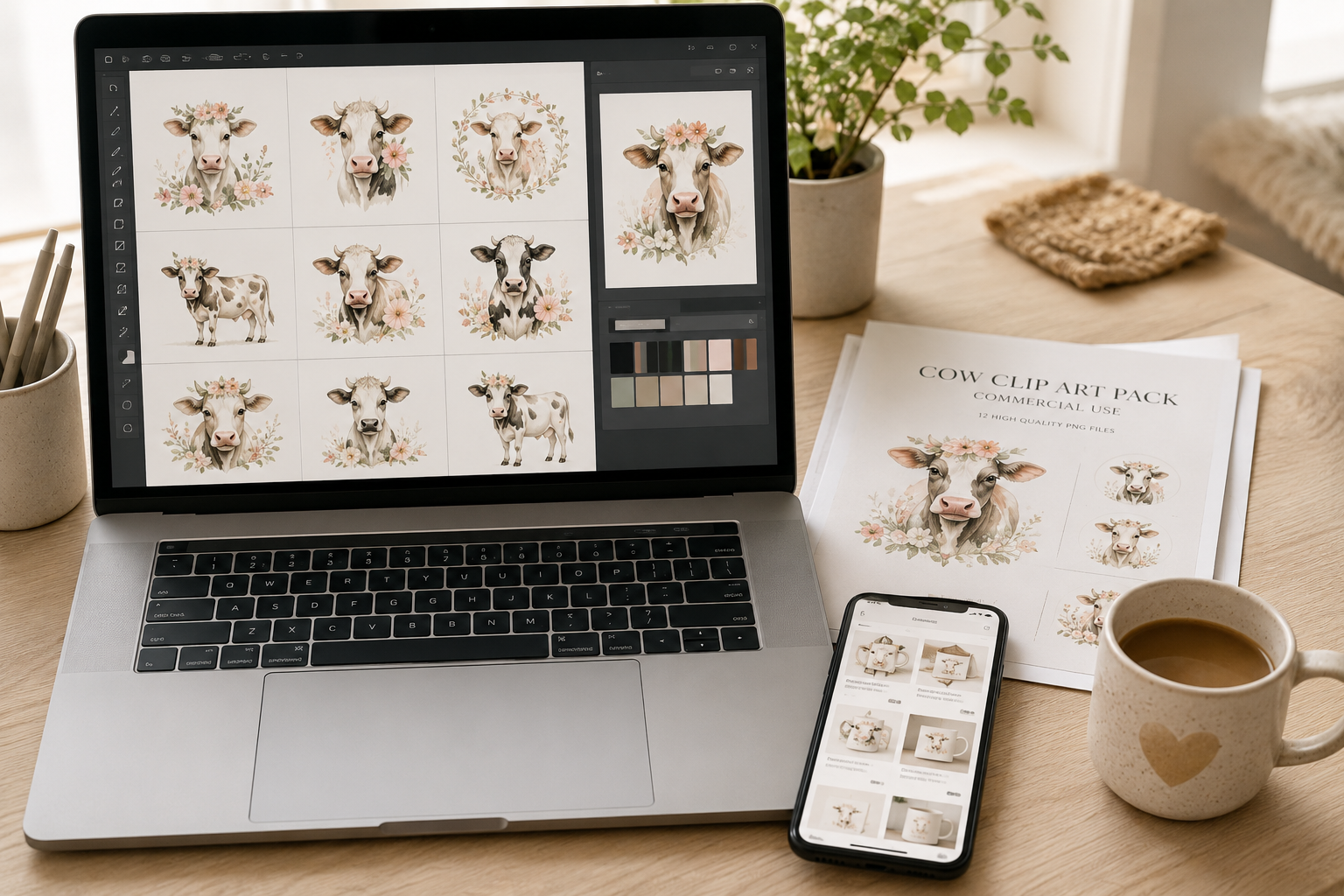
How a Simple PDF Business Hit $5,650 Weekly Using Claude AI for Free
A PDF digital product side business works by packaging AI-made images into a single downloadable PDF, listing it on a marketplace like Etsy, and letting buyers pay once for instant access to files they can print at home.
One seller used this exact model to bring in close to $39,000 in under two months, which works out to roughly $5,650 in some strong weeks.
The surprising part is how simple the actual product is.
There’s no software to build.
There’s no inventory to ship.
There’s just a folder of images turned into one PDF file.
This article breaks down that entire workflow in plain language, step by step, so you can see exactly how it works.
We strongly recommend that you check out our guide on how to take advantage of AI in today’s passive income economy.
Table of Contents
Why People Pay For Printable Clip Art
There’s a large market of buyers who want digital images they can print out for craft projects, party invitations, journals, and school work.
Many of these buyers know AI tools exist.
But they don’t want to learn a new tool or spend hours experimenting with prompts.
They would rather pay a few dollars and get exactly what they need in minutes.
This gap between “I could make it myself” and “I’d rather just buy it” is what makes a PDF digital product side business work.
Sellers who understand this gap can build a small catalog of designs once and sell that same catalog hundreds of times.
That’s the core appeal of a PDF digital product side business: you do the work one time, and the product keeps selling on autopilot.
Step One: Pick A Specific Niche, Not A Broad One
The seller behind this case study didn’t start with “clip art” as a category.
They started narrow, choosing something like farm animals, then narrowed again to a single animal like cows.
Going narrow matters because broad keywords have far more competition, while specific ones are easier to rank for in search.
A listing titled with a long, specific phrase tends to outperform a vague one, because it matches exactly what a smaller, more motivated group of buyers is typing into the search bar.
This same principle applies to any PDF digital product side business, whether the niche is farm animals, holiday stickers, or wedding planning templates.
Picking a tight niche before generating a single image saves hours of wasted design work later.
Step Two: Generate The Images
Once a niche is chosen, the next step is generating the actual artwork using an AI image tool.
The seller in this example used a 4,000 by 4,000 pixel canvas at 300 DPI, which is the print-quality standard needed for physical printing.
Most successful listings in this space contain somewhere between 20 and 60 individual images, not hundreds.
Quality and consistency matter more than sheer volume, since buyers are looking for a cohesive set that matches one style.
A seller can generate a base design, then use that same tool to create variations, keeping the color palette and art style consistent across the whole pack.
This is also where a thumbnail image becomes important, since a clean, eye-catching cover image is often the difference between a click and a scroll-past.
Step Three: Turn The Images Into A PDF
This is the part that surprises most beginners, because the product isn’t actually the images themselves.
The product is a PDF.
Here’s how that works in practice.
All the exported image files get uploaded to a cloud storage folder, such as Google Drive, with sharing permissions set so anyone with the link can view them.
That shareable link then gets placed inside a simple one-page document that thanks the buyer, explains how to access their files, and answers basic questions about printing.
That one page gets saved as a PDF and uploaded to the marketplace listing as the digital file for sale.
So the PDF isn’t the artwork, it’s the delivery instructions, and the artwork itself lives safely in the cloud folder the PDF links to.
This is exactly why the phrase PDF digital product side business fits the model so well, since the humble PDF is doing all the customer service and file delivery work automatically, with zero manual effort after the first sale.
If you want a shortcut for setting up this kind of automated delivery system correctly the first time, The AI Blog Monetization Quickstart Guide walks through the exact setup for digital delivery pages.
Step Four: Let Claude AI Handle The Listing Copy
Writing a strong product title, tags, and description by hand for every single listing gets exhausting fast, especially once a seller has multiple products live.
This is where Claude AI becomes genuinely useful for a PDF digital product side business.
A seller can paste in a competitor’s listing title as a reference, then ask Claude to write fresh variations focused on their specific niche, such as cows or farm animals.
Claude can also generate a full set of relevant tags and a clean product description in the same conversation, which saves significant time compared to writing everything from scratch.
Because marketplace search algorithms reward complete, well-tagged listings, filling in every available tag field with relevant keywords tends to improve visibility.
This single habit, using Claude AI to draft listing copy instead of staring at a blank text box, is one of the biggest time-savers in the entire PDF digital product side business model.
If you’re new to using Claude AI for tasks like this, Start a 1-Person Business With Claude AI — Free Quick-Start Guide is a good starting point for learning the basics of prompting it for real business tasks.
Step Five: Price The Listings To Sell
Pricing in this space tends to sit in the $2 to $5 range per pack, which keeps the purchase decision low-risk for the buyer.
Lower individual prices work because volume, not high ticket size, is what drives the weekly income in a PDF digital product side business.
A single listing selling for $3 a handful of times a day adds up quickly across dozens of live listings.
New sellers often make the mistake of pricing too high out of the gate, which slows down the early reviews and sales history a new shop needs to start ranking.
Starting lower, gathering reviews, and gradually testing higher prices tends to work better than starting expensive.
Step Six: Drive Organic Traffic With Search And Pinterest
Marketplace search traffic is the first and most important channel for any PDF digital product side business, since millions of shoppers browse these platforms every single month already looking to buy.
Specific, longtail titles rank better in this internal search than short, generic ones.
Pinterest is the second major channel, since it functions as a visual search engine where buyers actively look for design inspiration and save pins for later.
Uploading individual images from a pack directly to Pinterest, with each pin linked back to the shop listing, creates a steady stream of free traffic over time.
Popular niches like farm animals or clip art in general already show thousands of saved pins, which signals real, ongoing buyer demand.
Posting consistently, even just a few pins a day, compounds over weeks into a meaningful traffic source for a PDF digital product side business.
For a deeper walkthrough on turning content like blog posts and pins into consistent traffic and sales, The AI Blog Monetization Quickstart Guide covers the same organic growth principles used here.
Step Seven: Scale By Repeating The System
Once one listing is live and selling, the entire process gets repeated for a new niche, a new animal, a new theme, or a new seasonal trend.
Because the images are made once and the PDF delivery system is already built, each new listing takes far less time than the first one did.
This is how a single seller scaled from one small listing to a catalog generating close to $39,000 in under two months.
Scaling isn’t about working more hours, it’s about repeating a proven PDF digital product side business template across more niches.
👉Free download: Start a 1-Person Business With Claude AI — Free Quick-Start Guide breaks this repeatable process down into a simple starting checklist.
Where Claude AI Fits Beyond Listings
Claude AI isn’t limited to writing titles and tags in this workflow.
It can also help draft the thank-you PDF page itself, suggest niche ideas worth testing, and even help troubleshoot slow-selling listings by rewriting the copy.
For sellers who want ready-made prompts instead of building their own from scratch, The Claude AI Digital Product Starter Pack — 10 Done-For-You Prompts for Beginners includes prompts built specifically for tasks like this.
Having a set of tested prompts on hand removes the guesswork of figuring out what to type, which matters most in the first few weeks of running a new PDF digital product side business.
Common Mistakes To Avoid
New sellers often try to make too many images before testing whether the niche sells at all, which wastes time upfront.
Some skip Pinterest entirely and rely only on marketplace search, missing a large chunk of free traffic.
Others price too high or leave tag fields empty, both of which quietly hurt visibility.
Avoiding these three mistakes alone puts a new PDF digital product side business ahead of most listings in a crowded niche.
Final Thoughts
This case study shows that a PDF digital product side business doesn’t require advanced design skills, a large budget, or years of experience.
It requires picking a specific niche, generating a consistent set of images, packaging them properly, writing solid listing copy with help from Claude AI, and showing up consistently on both marketplace search and Pinterest.
None of these steps are complicated on their own, and together they form a repeatable system rather than a one-time lucky sale.
👉Get Access to: The AI Blog Monetization Quickstart Guide for the full traffic and monetization playbook referenced throughout this article.
👉 Get Access to the full Package: Start a 1-Person Business With Claude AI if you want the complete system in one place, from niche research through to your first live listing.
👉Free download: The Claude AI Digital Product Starter Pack — 10 Done-For-You Prompts for Beginners to skip the guesswork on your first batch of listing copy.
We strongly recommend that you check out our guide on how to take advantage of AI in today’s passive income economy.